
Note: This site participates in the Amazon Affiliates and other affiliate partner programs at no cost to you. Visiting an affiliate partner site may result in this site receiving a commission. For more information visit our Affiliate Disclosure page.
Lisbon is a hilly, cobbled city spread over seven-odd hills above the Tagus, and no single mode of transport covers all of it. The metro is fast but shallow, the trams are slow and famous, the funiculars save your legs on the steepest climbs, and a lot of the old centre is only really walkable. The trick is knowing which one to use for which trip.
The short answer
Buy a Navegante card at any metro station and load a 24-hour pass or top it up with pay-as-you-go credit. Use the metro for long hops and the airport, tram 15E for Belem, tram 28 as a sight in its own right, the Gloria and Bica funiculars for the hills up to Bairro Alto, and your feet for Alfama, the Baixa and Chiado. Take the CP train from Rossio for Sintra.
The Navegante card: sort this first
The Navegante card (you may still see it called Viva Viagem) is a reusable paper smartcard, about 50 cents, that you load with travel. You have three options:
- Zapping. Pay-as-you-go credit, a little under 2 euros a trip, deducted as you tap. Good if you will only take a few rides.
- 24-hour pass. Around 7 euros, unlimited on the metro, Carris buses, trams and funiculars, and the Santa Justa lift. It does not cover the trains to Sintra or Cascais.
- A more expensive 24-hour version that adds the CP trains to Sintra and Cascais, worth it only on a day you are doing one of those trips.
Each traveller needs their own card for the metro gates. Prices change, so check the current fares at the machine.
The metro
Lisbon has four lines, known by colour: Blue, Yellow, Green and Red. They cross at a handful of interchanges, Baixa-Chiado, Marques de Pombal, Alameda, Saldanha and Sao Sebastiao, and trains run from about 06:30 to 01:00.
The metro is the right choice for distance: airport to centre, the Avenida and Marques de Pombal, out to Parque das Nacoes. What it does not do is reach the places tourists most want. There is no metro to Belem, no metro up to the castle, and Baixa-Chiado is as close as it gets to Alfama and Bairro Alto. For those you switch to a tram, a bus or your feet.
From the airport: the Red line runs from a station inside the terminal. For the Baixa, change to the Green line at Alameda; the whole trip is around 25 minutes. A taxi or Uber to the centre runs roughly 10 to 15 euros.
Trams
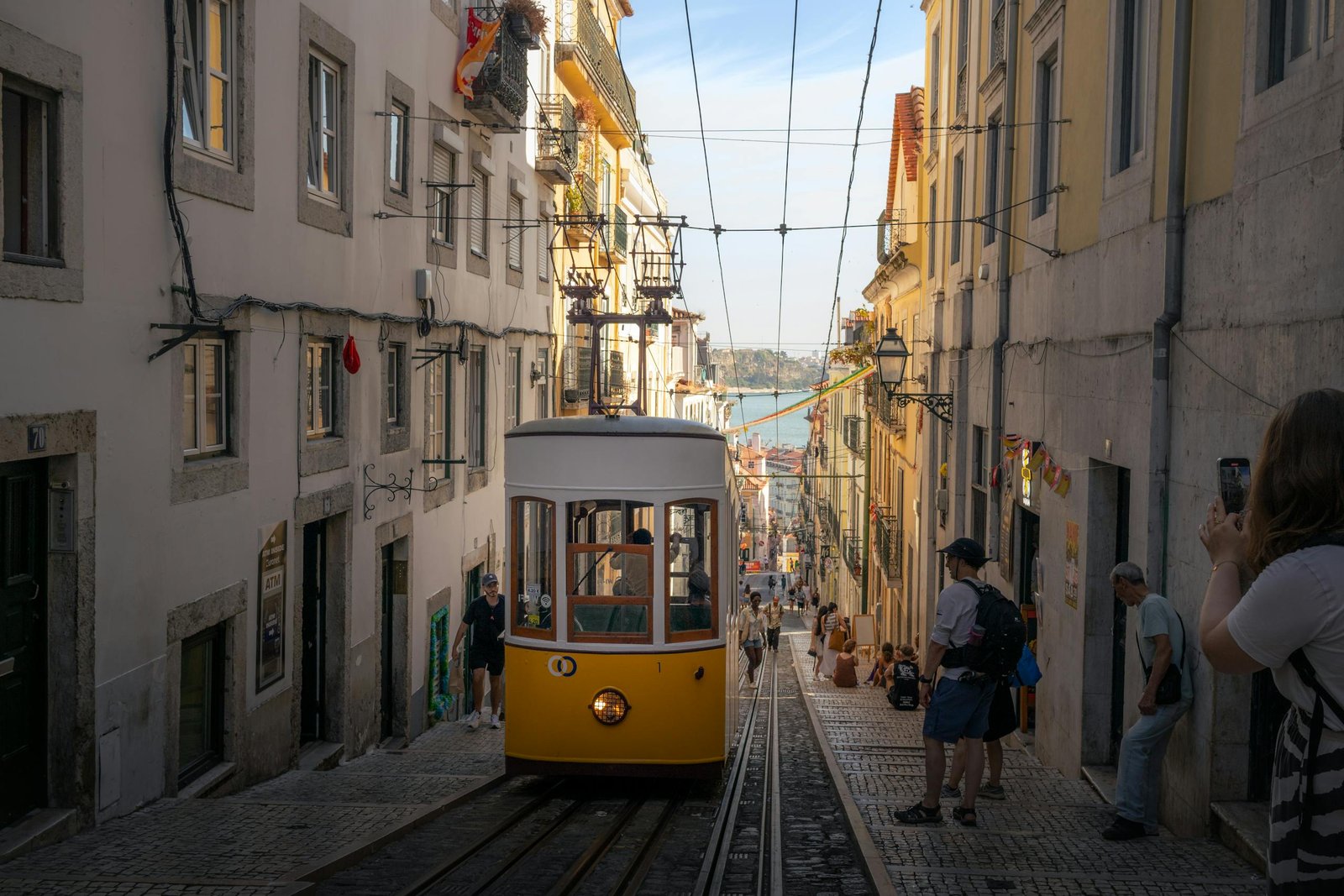
- Tram 28 is the one everyone means. A vintage car that grinds from Martim Moniz through Graca, Alfama, the Baixa, Chiado and on to Estrela and Campo de Ourique. It is a ride worth taking, but it is packed most of the day and a known spot for pickpockets. Board at either end of the line, Martim Moniz or Campo de Ourique, for a seat, and go early or late.
- Tram 15E is a modern articulated tram from Praca da Figueira and Cais do Sodre out to Belem in about half an hour. This is the practical way to the monastery and the pastry shops, not the metro.
- Trams 12, 24 and 25 cover shorter loops around the centre and the western hills and are far quieter than the 28.
Funiculars and the Santa Justa lift
Three funiculars haul you up the steepest streets: the Gloria from Restauradores to the Sao Pedro de Alcantara viewpoint, the Bica from near Cais do Sodre up to Bairro Alto, and the older, quieter Lavra. The Santa Justa lift is a vertical iron elevator connecting the Baixa with the Largo do Carmo. All four are covered by the 24-hour pass; paid singly in cash they are expensive for the short ride. The queue for the Santa Justa lift is often long; you can walk to its upper level from the Carmo side instead.
Buses
Carris buses fill in everywhere the metro and trams do not go. Bus 737 is the easy way up to the castle from Praca da Figueira. After the metro closes, the night bus network (Rede da Madrugada) keeps the main routes running.
Ferries across the Tagus
The commuter ferries are cheap, covered by your Navegante credit, and give you a view of the city from the water. The most useful for visitors is Cais do Sodre to Cacilhas, about 10 minutes, for the Cristo Rei monument and the seafood restaurants on the south bank. Other routes run from Belem and from Terreiro do Paco.
Trains for day trips
Portugal’s CP runs two suburban lines that matter to visitors:
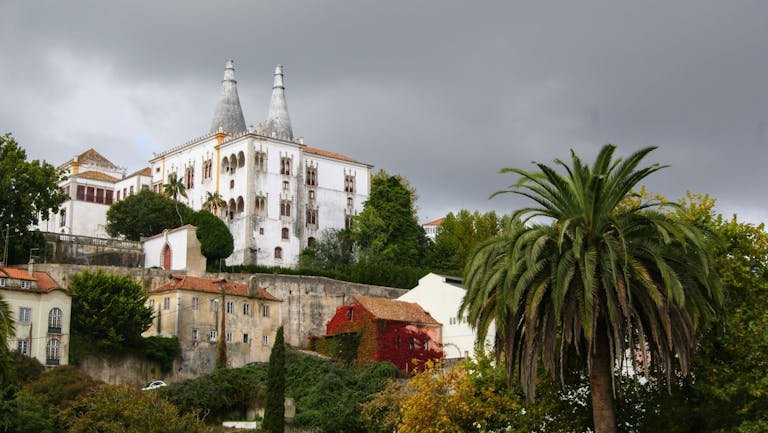
- Sintra line from Rossio station in the centre, about 40 minutes to Sintra, a few euros each way. Rossio station itself, with its horseshoe Manueline doorways, is worth a look.
- Cascais line from Cais do Sodre, running along the coast through Belem, Oeiras and Estoril to Cascais in about 40 minutes.
Neither is covered by the standard 24-hour pass; use zapping credit or the train-inclusive pass.
Taxis, Uber and tuk-tuks
Metered taxis are plentiful and regulated. Uber and Bolt both operate and are often cheaper, especially at busy times. The tuk-tuks you see around Rossio and the cathedral are tourist-priced; agree the fare first, and treat them as a sightseeing option for the Alfama hills rather than transport.
Walking, and the hills
The Baixa, Chiado, Alfama and Bairro Alto are all walkable and best seen on foot, but Lisbon is steep and paved with calcada, small stone blocks that are slick when wet. Wear shoes with grip, and use the funiculars and tram 28 to gain height rather than climbing every hill yourself.
Building a route around the sights
- Baixa and Chiado: on foot, with the Santa Justa lift or the Bica funicular for the climb into Bairro Alto.
- Alfama and the castle: tram 28 or bus 737 up, then walk down through the lanes to the river.
- Belem: tram 15E or the Cascais-line train to Belem station, for the monastery, the tower and the pastries.
- Parque das Nacoes: Red line to Oriente, for the Oceanarium and the modern riverfront.
- Cristo Rei and the south bank: ferry from Cais do Sodre to Cacilhas, then a short bus.
Planning your walking route by the views? Top Viewpoints in Lisbon →
Frequently asked questions
Is the Navegante card worth it?
Yes. Single paper tickets are not sold on board, so you need the card regardless. Load a 24-hour pass on a busy sightseeing day, or zapping credit if you will only take a few rides.
How do you get from Lisbon airport to the city centre?
The Red metro line from the terminal, changing to the Green line at Alameda for the Baixa, about 25 minutes. A taxi or Uber is roughly 10 to 15 euros.
Is tram 28 worth riding?
As an experience, yes, but it is crowded and slow and pickpockets work it. Ride it early or late, board at the end of the line, and keep your bag in front of you.
Do you need the metro for Belem?
No, the metro does not reach Belem. Take tram 15E from Praca da Figueira or Cais do Sodre, or the Cascais-line train.
Taxi or Uber in Lisbon?
Both are fine. Uber and Bolt tend to be cheaper and the fare is fixed in advance; taxis are metered and easy to hail.
Where to go next
Building your walk around the views? See Top Viewpoints in Lisbon. Ready for a day out of the city? Read Sintra Day Trip from Lisbon. Everything we have written on the country sits on the Portugal hub.
This article is for informational and educational purposes only. Always verify current travel requirements with official government sources before making travel decisions.
Partner resource. We may earn a commissionBook Lisbon tours & tickets (Viator) →