Note: This site participates in the Amazon Affiliates and other affiliate partner programs at no cost to you. Visiting an affiliate partner site may result in this site receiving a commission. For more information visit our Affiliate Disclosure page.
Edinburgh’s Royal Mile is not merely a street—it’s a living timeline of Scotland’s past, stretching from the formidable ramparts of Edinburgh Castle to the modern Scottish Parliament Building. This 200-yard-extended thoroughfare, crowned with medieval tenements and crowned by a castle that has witnessed centuries of history, offers more than a stroll; it offers a portal into the soul of a city that has long balanced rebellion and royalty. For travelers, it is a journey through layers of history, where every cobblestone whispers tales of kings, revolutions, and the relentless pulse of a capital that never stops evolving.
Edinburgh Castle: A Fortress of Legacy and Majesty
Perched atop Castle Rock, Edinburgh Castle has dominated the city skyline since at least the 12th century. Its strategic position on an ancient volcanic outcrop made it a natural stronghold, and over the centuries, it became the political and military heart of Scotland. The castle’s history is a tapestry of royal residences, sieges, and national symbols. Within its walls lie the Crown Jewels of Scotland, housed in the Crown Room, and the Stone of Destiny, which once symbolized the sovereignty of Scottish kings. The 17th-century Great Hall, with its grand dining table, offers a glimpse into the opulence of royal life, while the 16th-century Half Moon Battery reveals the castle’s military might.
For travelers who want a specialist-led cultural experience in Edinburgh rather than a standard tour group, Ekta Traveling curates smaller, more focused options. Ekta Traveling

Edinburgh’s most-booked experiences – from walking tours to skip-the-line tickets – start selling out 4-6 weeks ahead in peak season. Here’s what other travelers are booking right now. Viator

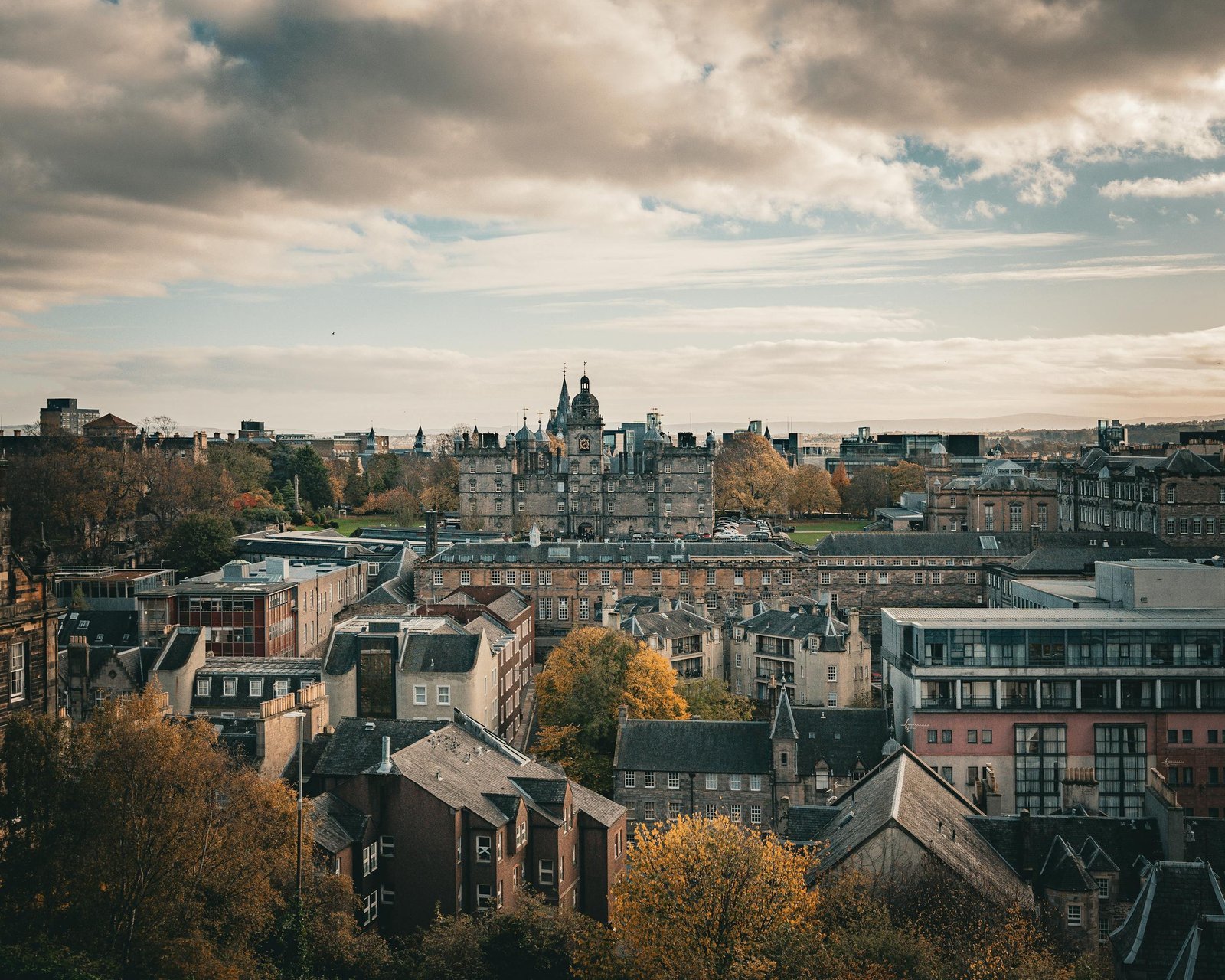
Visitors can ascend the steepest road in Britain, the Castle Esplanade, to reach the gates of this historic fortress. The view from the ramparts is unparalleled: the Old Town sprawls below, with the Royal Mile snaking through its medieval architecture, while the modern skyline of Edinburgh rises to the west. The castle’s role as a military garrison until 1960 means its history is not confined to the past—it remains a functioning site, with the One O’Clock Gun still fired daily from the Esplanade. This ritual, a tradition since 1861, is a stark reminder of the castle’s enduring presence.
The Royal Mile’s starting point at the castle is not just a physical marker but a symbolic one. From this vantage, the walk downhill to the Palace of Holyroodhouse becomes a journey through the city’s evolution. The castle’s history as a royal residence is inextricably linked to the Royal Mile; it was from here that monarchs would travel to the palace below, a route that became the spine of Edinburgh’s urban development. Today, the castle remains a testament to Scotland’s resilience, its scars from battles and renovations a narrative of survival.
For those seeking a deeper dive, the castle’s audio guides and expert-led tours provide context to its role in key historical events, such as the Wars of Scottish Independence and the Jacobite uprisings. The Edinburgh Castle website offers a comprehensive timeline, but on-site, the contrast between the grandeur of the Crown Jewels and the somber Stone of Destiny underscores the duality of Scotland’s history—both triumphant and turbulent.
Gladstone’s Land: A Tenement Window into the Past
As the Royal Mile descends from the castle, the landscape shifts from military fortifications to the domestic lives of Edinburgh’s citizens. Gladstone’s Land, a 17th-century tenement building, offers a rare, preserved glimpse into this world. Acquired by merchant Sir George Gladstone in 1617, the structure was expanded over decades to accommodate growing families and shifting economic tides. Today, visitors can tour the five-room interior, where period-accurate furnishings and costumed guides bring the era to life. The building’s narrow, winding staircases and shared courtyards exemplify the ingenuity of urban planning in a city where space was a luxury.
Edinburgh’s tenements were more than just housing—they were microcosms of society. Gladstone’s Land reveals the vertical stratification of the city: the ground floor was often occupied by artisans or shopkeepers, while upper floors housed families. The building’s crowning glory, a rooftop drying room, highlights the challenges of life in a dense, medieval city. Interactive exhibits here explain how these structures became the backbone of Edinburgh’s population growth, accommodating thousands in a space that now feels both intimate and claustrophobic.
Walking through Gladstone’s Land, it’s easy to imagine the daily rhythms of 17th-century life. The scent of smoke from open hearths, the clatter of wooden shutters, and the murmur of neighbors in shared corridors paint a vivid picture of a community bound by proximity. The National Trust for Scotland, which manages the site, has preserved the building with meticulous attention to detail, from the original flagstones to the hand-carved furniture. For travelers, this stop is a poignant reminder that the Royal Mile is not just about grand architecture—it’s about the people who lived, loved, and labored within it.
The tenement’s history is also a story of adaptation. Gladstone’s Land survived fires, renovations, and even a stint as a wartime hospital. Its survival into the 21st century is a testament to the preservation efforts that have kept the Royal Mile’s medieval character intact. By the time visitors reach the building’s exit, they are not just exiting a historical site but stepping back into the bustling, tourist-filled street that continues to echo with the past.
St Giles Cathedral: The Spiritual and Architectural Heart of Edinburgh
Nearly a mile from the castle, the spire of St Giles Cathedral rises above the chaos of the Royal Mile, a beacon of religious and architectural history. Originally a Roman Catholic cathedral, St Giles became the seat of the Church of Scotland during the Reformation and remains a central symbol of the city’s spiritual evolution. Its striking mix of Gothic and Renaissance architecture reflects centuries of additions and renovations, with the 16th-century choir and 19th-century spire standing as testaments to its layered history.
The cathedral’s interior is equally compelling. The famous “Dean’s Eye,” a small, unassuming window in the north transept, offers a panoramic view of the city—a vantage point once used by the cathedral dean to monitor Edinburgh’s activities. Inside, the Kirk of St Giles, a smaller chapel within the cathedral, houses memorials to key figures of the Scottish Reformation. The stained glass, though modern in some sections, captures the vibrant hues of a city that has long embraced both tradition and transformation.
St Giles is more than a place of worship; it is a cultural hub. The cathedral hosts regular concerts and events, from choral performances to historical lectures, ensuring its relevance in the 21st century. For travelers, the experience of entering this hallowed space—a place where Mary, Queen of Scots once prayed and where John Knox preached—offers a moment of reflection amid the Royal Mile’s tourist din. The contrast between the cathedral’s serenity and the street’s energy is a microcosm of Edinburgh itself: a city that balances reverence with revelry.
The Royal Mile’s path to St Giles is dotted with alleys and courtyards that hint at its medieval past. The Canongate, a section of the Mile near the cathedral, was once a gateway to the city for merchants and pilgrims. Here, narrow lanes and hidden squares reveal the organic growth of Edinburgh, where each turn could lead to a new story or a forgotten relic. The cathedral’s presence anchors these stories, providing a spiritual and historical focal point for the entire route.
John Knox House and the Legacy of the Reformation
Further along the Royal Mile, the John Knox House Museum offers a quieter, more introspective stop. This 16th-century townhouse, where the Protestant reformer John Knox once lived, is a modest structure compared to the grandeur of the castle or the cathedral. Yet its significance is immense. The museum’s exhibits trace Knox’s role in shaping the Scottish Reformation, with artifacts including his personal belongings and rare manuscripts. The house itself, with its low ceilings and stone walls, provides a tangible connection to the man who challenged Catholic authority and reshaped Scotland’s religious identity.
John Knox’s influence extended beyond theology. The Reformation, which began in the 1560s, had profound political and social consequences, leading to the dissolution of monasteries and the establishment of a Presbyterian Church. The Royal Mile, as the site of St Giles Cathedral, became a stage for these changes, and the John Knox House stands as a reminder of the personal stakes involved. The museum’s guided tours explain how Knox’s fiery sermons and writings fueled a movement that would ripple across Europe.
Visiting the house, travelers gain insight into the domestic life of a reformer whose ideals were as uncompromising as they were transformative. The simplicity of the rooms contrasts with the complexity of the era’s conflicts. Here, in a space that once hosted debates and clandestine meetings, the human side of history emerges. The museum also highlights the broader context of the Reformation, linking Knox’s work to figures like Martin Luther and the wider Protestant movement.
For those walking the Royal Mile, the John Knox House is a bridge between the castle’s royal past and the city’s modern identity. It is a place where the echoes of revolution meet the rhythms of daily life, a fitting stop before the final descent to the Scottish Parliament Building, where history continues to unfold.
The Tron Church and the Modern Royal Mile
As the Royal Mile approaches its endpoint at the Scottish Parliament Building, the Tron Church stands as a testament to the city’s enduring faith and civic pride. Built in the 14th century, the church is a rare surviving example of medieval parish architecture, its clock tower having marked time for Edinburgh’s residents for centuries. The church played a role in the city’s governance, as it was once a site for public announcements and even a makeshift prison during the Reformation. Today, it remains an active congregation, blending historical significance with contemporary worship.
The Royal Mile’s lower stretch, from the Tron Church to the parliament, is a space where history and modernity intersect. The Scottish Parliament Building, with its striking contemporary design, contrasts sharply with the medieval tenements and churches that line the street. This juxtaposition is intentional, reflecting Edinburgh’s ability to honor its past while embracing the future. The parliament, opened in 2001, is a hub of political activity, and visitors can take free guided tours to witness democracy in action.
For travelers, this final leg of the Royal Mile offers a chance to reflect on the journey. The castle’s shadow, cast from the hilltop, looms over the entire route, a constant reminder of the city’s central role in Scotland’s story. The Mile’s transformation from a royal procession route to a bustling tourist corridor is a narrative of adaptation and preservation. Along the way, hidden closes and courtyards invite detours, each revealing another facet of Edinburgh’s layered history.
The Royal Mile’s conclusion at the parliament building is not an end but a transition. From here, the Grassmarket and Cowgate continue the story, but for those who have walked from the castle to the palace, the Mile itself is a complete journey—a thread through time that connects Scotland’s past to its present.
Frequently Asked Questions About the Royal Mile
How long does it take to walk the Royal Mile? The walk from Edinburgh Castle to the Scottish Parliament Building takes approximately 30–45 minutes at a leisurely pace. However, with time spent exploring landmarks like St Giles Cathedral and Gladstone’s Land, a full visit can extend to 2–3 hours.
Are there ticket options for multiple attractions? The Edinburgh Pass offers combined entry to the castle, St Giles Cathedral, John Knox House, and other sites along the Mile, along with free hop-on-hop-off bus service. For budget-conscious travelers, individual tickets are often more cost-effective.
What are the best times to avoid crowds? Early mornings and weekday afternoons tend to be less crowded, particularly at the castle and Gladstone’s Land. During peak tourist seasons, booking timed tickets in advance is advisable.
Is the Royal Mile accessible for visitors with mobility challenges? While much of the Mile is paved, some sections have uneven cobblestones and steep inclines. The castle and several attractions offer accessible entrances and facilities, but navigating the entire route may require planning for mobility aids.
This article is for informational and educational purposes only. Always verify current travel information, visa requirements, entry rules, and health guidance with official government sources and qualified professionals before making travel decisions.