
Note: This site participates in the Amazon Affiliates and other affiliate partner programs at no cost to you. Visiting an affiliate partner site may result in this site receiving a commission. For more information visit our Affiliate Disclosure page.
Lisbon is built across a run of steep hills above the Tagus, and the payoff for all the climbing is the miradouro: a terrace, usually with a kiosk cafe and a few benches, set where the street runs out of hill. There are dozens. This guide covers the ones worth planning a walk around, how they differ, and how to reach them without wearing yourself out.
The short answer
If you only have time for two, make them Portas do Sol and Santa Luzia, side by side in Alfama, for the classic view over the old rooftops to the river. For the widest panorama, climb to Senhora do Monte in Graca. For sunset, Santa Catarina or Sao Pedro de Alcantara in Bairro Alto. Most miradouros are free; a few of the built viewpoints charge a small fee.
The Alfama pair: Portas do Sol and Santa Luzia
These two sit within a minute of each other on the tram 28 route, on the southern edge of the Alfama district. Miradouro das Portas do Sol looks straight down over the tiled roofs of Alfama to the dome of Sao Vicente and the cruise terminal on the river. It is the image most people have of Lisbon. Miradouro de Santa Luzia, just below it, is a small tiled terrace with a pergola and bougainvillea, quieter and more sheltered. Come early; both fill with tour groups by mid-morning.
The high ones: Senhora do Monte and Graca
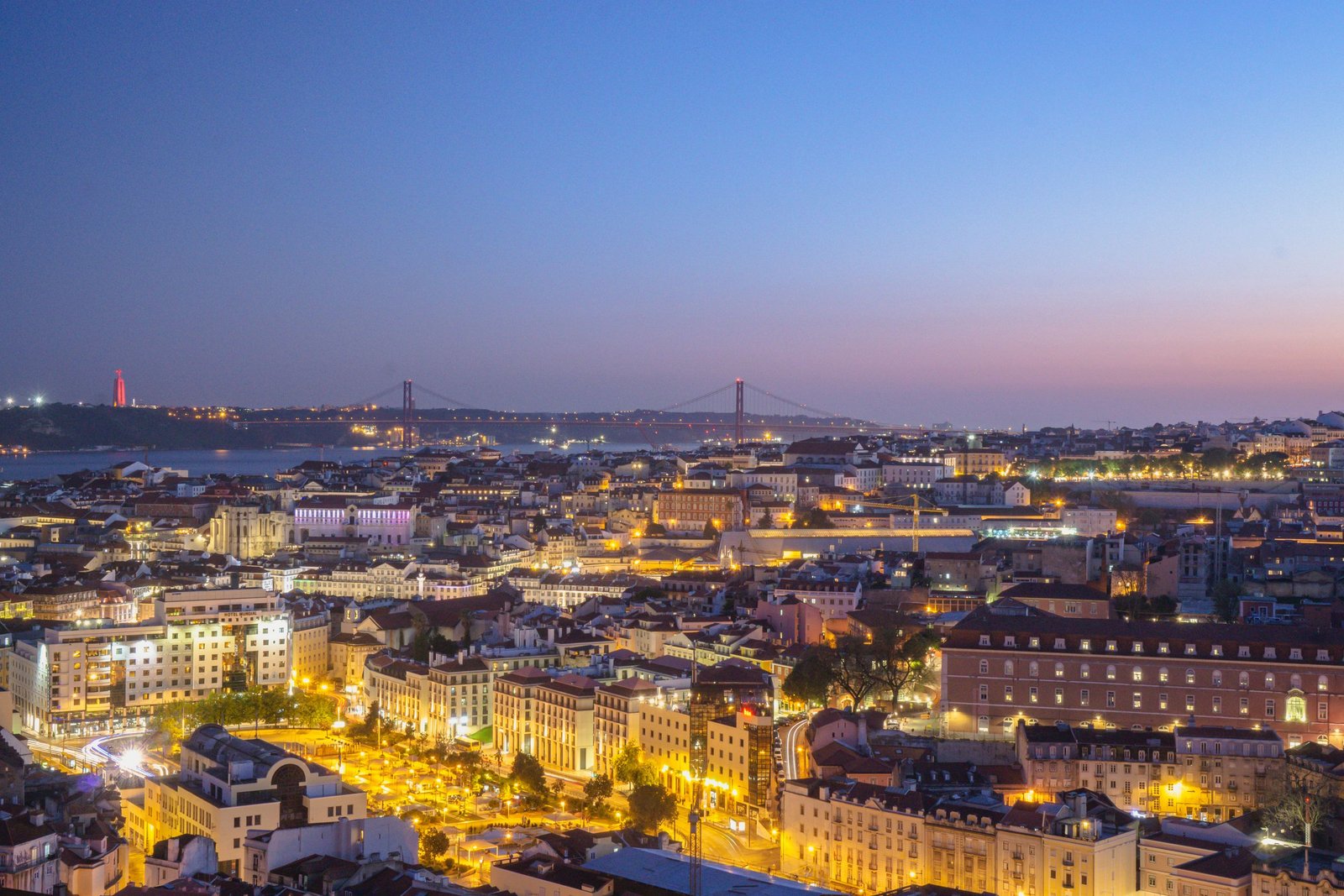
Miradouro da Senhora do Monte is the highest viewpoint in the city, on a rise in Graca. The panorama is the broadest you will get: the castle in the middle distance, the whole downtown, the river, and the 25 de Abril bridge off to the left. There is no cafe, just a low wall and a small chapel, and it is a well-known sunset spot. A few minutes downhill, the Miradouro da Graca (officially Sophia de Mello Breyner Andresen) is a broad terrace shaded by pines with a proper kiosk, facing the castle. Between them they make a good pair.
Bairro Alto: Sao Pedro de Alcantara and Santa Catarina
Miradouro de Sao Pedro de Alcantara is a two-level garden terrace at the top of the Gloria funicular, which climbs from Restauradores square. It faces east across the valley to the castle and the Alfama hill, and it is laid out with hedges, a fountain and busts of historical figures. Miradouro de Santa Catarina, closer to the Bica funicular, faces the river and the bridge and draws a younger evening crowd with buskers and a kiosk bar. Both are among the best places in the city to watch the sun go down.
The built viewpoints
- Castelo de Sao Jorge. The castle ramparts are the highest vantage point in central Lisbon, a full sweep over the city and the river. Entry is ticketed and it is busy; go at opening or in the last hour.
- Elevador de Santa Justa. The 1902 iron lift connects the Baixa with the Largo do Carmo. There is a small viewing platform at the top, a 360-degree view over the grid of the Baixa, Rossio and the castle. You can also reach the top-level walkway on foot from the Carmo side and skip the lift queue.
- Arco da Rua Augusta. The triumphal arch on Praca do Comercio has a lift and a short stair to a rooftop terrace looking down Rua Augusta and out over the square to the river. Small fee, rarely crowded.
Across the river
The Cristo Rei monument stands on the Almada cliffs on the south bank, and the platform at its base gives the one view that includes Lisbon, the full span of the 25 de Abril bridge, and the river together. Reach it with the ferry from Cais do Sodre to Cacilhas and a short bus ride, or a bus straight from Lisbon.
Paid rooftops
For a full circle without a hill, Amoreiras 360 Panoramic View is the rooftop of the Amoreiras shopping towers, one of the tallest points in the city, with a timed entry ticket. Several hotels in the Baixa and Avenida da Liberdade also run rooftop bars that are open to non-guests in the evening.
Practical tips
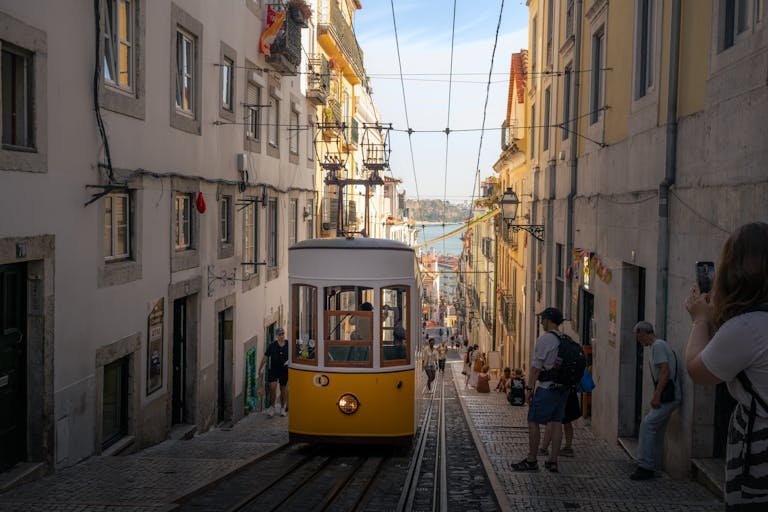
- Reach the high ones by tram or funicular. Tram 28 passes Portas do Sol and Santa Luzia. The Gloria funicular serves Sao Pedro de Alcantara, the Bica funicular is near Santa Catarina. Walking up is possible but steep.
- Go early or at sunset. Late morning to mid-afternoon is the busiest and the light is flat. The hour before sunset is both quieter and better for photos.
- The kiosks are the point. Most miradouros have a quiosque selling coffee, beer and snacks with tables in the view. It is the cheapest way to sit somewhere spectacular.
- At night, stick to the busy ones. Santa Catarina and Sao Pedro de Alcantara stay lively after dark; the quieter terraces are best left for daylight.
- Carry water. The climbs add up and Lisbon gets hot from June to September.
Frequently asked questions
Which is the best viewpoint in Lisbon?
Portas do Sol for the classic Alfama-to-river view, Senhora do Monte for the widest panorama. Between them they cover the two things people come for.
Are the miradouros free?
Most are, including all the Alfama and Graca terraces. The castle, the Santa Justa platform, the Rua Augusta arch and the Amoreiras rooftop all charge a small entry fee.
Where is the best place to watch the sunset?
Santa Catarina and Sao Pedro de Alcantara in Bairro Alto face west toward the river and the bridge. Senhora do Monte also works and is usually calmer.
How do you get up to the viewpoints?
Tram 28 and the Gloria and Bica funiculars connect the main ones. Otherwise it is a steep walk; wear proper shoes.
Where to go next
Working out how to move around the city? See Best Ways to Get Around Lisbon. Planning a day out of the city? Read Sintra Day Trip from Lisbon. Everything we have written on the country sits on the Portugal hub.
This article is for informational and educational purposes only. Always verify current travel requirements with official government sources before making travel decisions.
Partner resource. We may earn a commissionBook Lisbon tours & tickets (Viator) →