
Note: This site participates in the Amazon Affiliates and other affiliate partner programs at no cost to you. Visiting an affiliate partner site may result in this site receiving a commission. For more information visit our Affiliate Disclosure page.
Two days is the right amount of time for Hiroshima: one for the Peace Memorial Park and the city, one for Miyajima. This is a workable plan for each day, with the timings and the practical details that the guidebooks tend to leave out.
The short answer
Day one: the Peace Memorial Park and Museum in the morning, the A-Bomb Dome and Hondori in the afternoon, okonomiyaki in the evening. Day two: an early tram and ferry to Miyajima, the full day on the island, back to the city for dinner. Get a one-day tram pass for day one and use it again on day two to reach the ferry.
Day 1: the Peace Park and the city
Morning: Peace Memorial Park and Museum
Start at the Peace Memorial Museum when it opens, before the tour groups. Give it at least 90 minutes. The English audio guide costs around ¥400 and is worth taking. The museum is direct and difficult, and most people need to sit quietly afterwards.
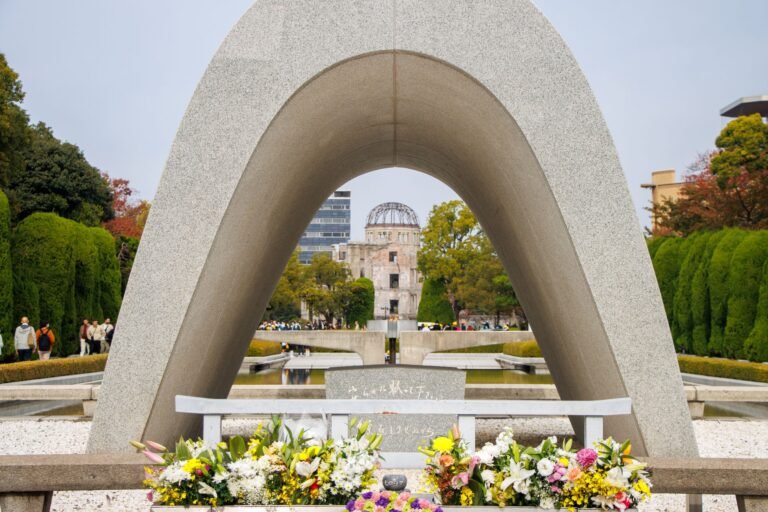
Then walk north through the park: the Cenotaph framing the eternal Flame of Peace and, beyond it, the A-Bomb Dome; the Children’s Peace Monument with its cases of folded paper cranes, tied to the story of Sadako Sasaki; and the National Peace Memorial Hall for the atomic bomb victims, which is underground, free, and quieter than the main museum. The whole circuit is about two hours at a reflective pace.
Afternoon: the A-Bomb Dome, Hondori and the castle
The A-Bomb Dome stands just across the river from the park, the ruin of the former Prefectural Industrial Promotion Hall, left as it was after the blast and now a UNESCO World Heritage site. You view it from outside; it is not enterable.
From there it is a short walk to the Hondori covered shopping arcade for lunch and a break from the weight of the morning. With time left, add one of:
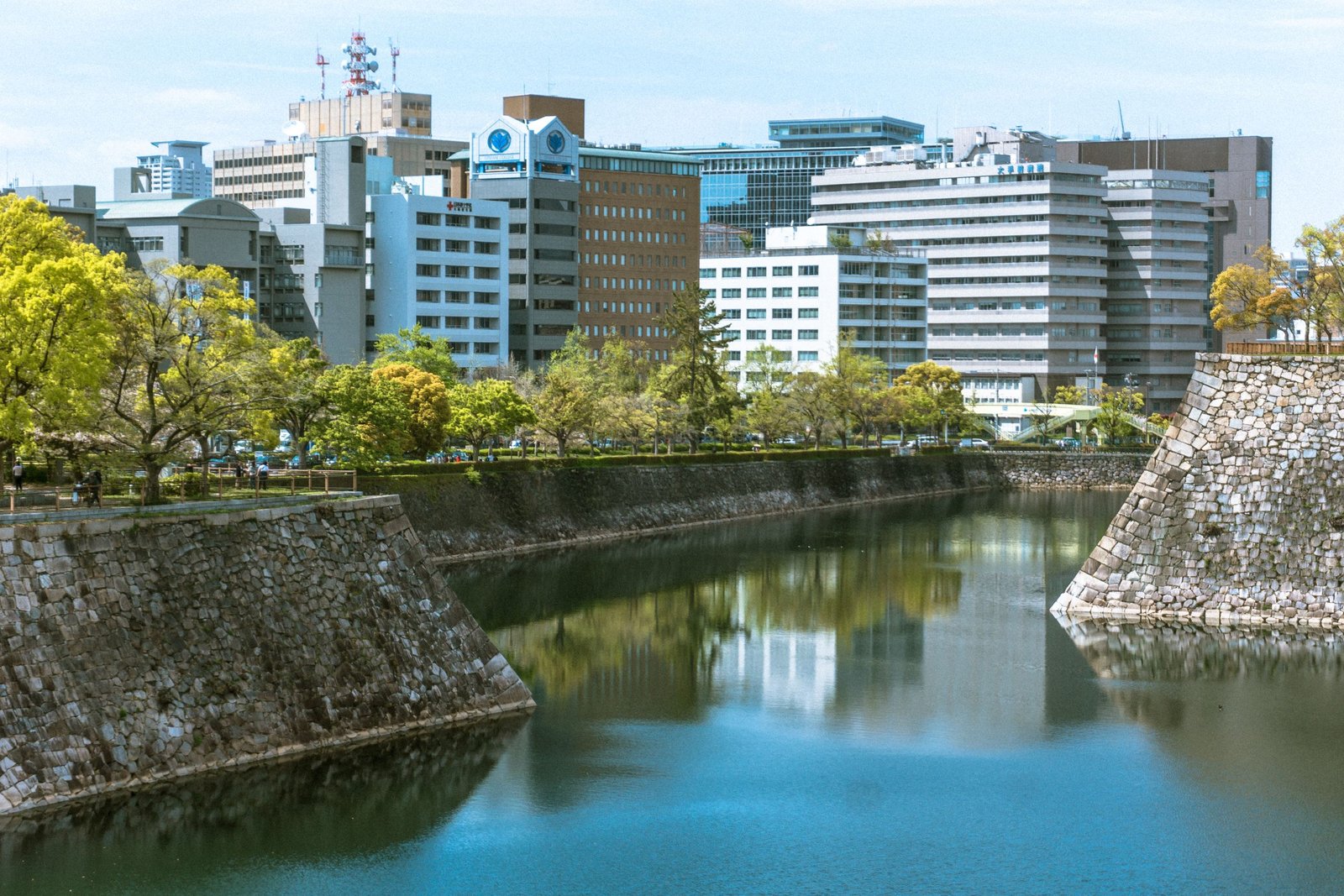
- Hiroshima Castle (“Carp Castle”), a 1958 reconstruction of the five-storey keep with a history museum inside and a pleasant moat to walk around.
- Shukkei-en, a compact classical garden laid out in 1620 and modelled on West Lake in Hangzhou, with a tea house (Seifukan) where you can stop for matcha. A ten-minute walk from the castle.
Deciding where to stay? Where to Stay in Hiroshima →
Evening: okonomiyaki
Hiroshima-style okonomiyaki is layered rather than mixed: a thin crepe, a heap of cabbage, noodles, pork and egg, assembled on a griddle in front of you. Okonomimura, a building of small stalls near Hondori, is the easy option, though locals will point you to quieter places nearby. Sit at the counter.
Day 2: Miyajima
Take an early tram or the JR Sanyo Line to Miyajimaguchi, then the ferry across (about 10 minutes). Going early gets you ahead of the day-trip crowds who arrive mid-morning.
On the island:
- Itsukushima Shrine and the floating torii gate. Check the tide times before you go: at high tide the gate stands in the water, at low tide you can walk out to it. Both are worth seeing, and the light is best in the late afternoon once the crowds thin.
- Mount Misen (535 m). Take the ropeway most of the way up, then walk the last stretch to the summit for the view over the Seto Inland Sea. Allow two to three hours round trip, or half a day if you hike up.
- The town and Omotesando arcade for momiji manju, the maple-leaf-shaped cakes made fresh here, and grilled oysters in season.
- Daisho-in temple on the lower slopes of Misen, often missed and one of the best things on the island.
The deer roam freely and will investigate any loose paper or food, so keep your map and ticket in a bag. Return to Hiroshima in the evening for dinner, or stay overnight in a Miyajima ryokan if the budget allows, which gives you the shrine and the torii almost to yourself after the last ferry.
Getting around
Hiroshima runs on streetcars (the Hiroden). A one-day pass covers the city lines and the run out to the Miyajima ferry. From the Shinkansen station, tram line 2 goes straight to the Peace Park in about 15 minutes. A preloaded IC card also works on the trams and buses, and buying single JR tickets at the station is straightforward: the machines have an English option and take cash or card.
Frequently asked questions
Can you see Hiroshima and Miyajima in one day?
It is possible but rushed. You would get a couple of hours in the Peace Park and a hurried afternoon on Miyajima. Two days lets you give each the time it needs. Our guide on one day versus two works through the trade-off.
How much time do you need at the Peace Memorial Park?
Around half a day. Ninety minutes to two hours for the museum, then another hour or two for the park itself, the A-Bomb Dome and the underground Memorial Hall.
Do you need to book anything in advance for Hiroshima?
Not for the Peace Park, the museum or Miyajima, which you can all just turn up to. Book accommodation ahead in cherry-blossom and autumn seasons, and reserve Shinkansen seats if you are travelling on a busy date.
When is the best time to visit Hiroshima?
Spring (late March to April) and autumn (November) for the weather and the colour. Winter, roughly November to March, is oyster season. The Hiroshima Flower Festival fills the city over Golden Week in early May.
Where to go next
Still weighing up how long to stay? See Hiroshima in 1 or 2 days. For the memorials in more depth, read Hiroshima history sites to visit, and for a bed, where to stay in Hiroshima. Everything we have written sits on the Hiroshima hub.
This article is for informational and educational purposes only. Always verify current travel requirements with official government sources before making travel decisions.
Partner resource. We may earn a commissionCompare places to stay in Hiroshima (Booking.com) →