
Note: This site participates in the Amazon Affiliates and other affiliate partner programs at no cost to you. Visiting an affiliate partner site may result in this site receiving a commission. For more information visit our Affiliate Disclosure page.
Almost everything that goes wrong with a Camino pack comes down to one number: how much it weighs. Carry too much and the walk becomes about your shoulders and your feet instead of the route. The standard advice is to keep the loaded pack, water aside, under about 10 percent of your body weight, which for most people lands somewhere between 6 and 8 kilograms.
This list is built around that limit. It covers what you actually need, what you can skip, and how to decide whether to carry your bag or send it ahead.
The short answer
You sleep indoors every night on the main routes, so you need no tent, no sleeping mat, and no cooking kit. A 30 to 40 litre pack is plenty. Take two of each item of clothing, one worn and one drying, a rain layer, a broken-in pair of shoes, a blister kit, and your pilgrim credential. Buy anything you forgot in the next town; the routes are lined with shops.
Pack weight is the whole game
Before you leave home, load your pack with everything you plan to carry, fill the water, and weigh it. Then walk a full day with it on. Whatever you resent carrying after 20 kilometres, take it out.
I carried a full-size backpack for the first days of my Camino, the Portuguese Coastal route, and both of us were tired and sore after around 20,000 steps under the load. We were managing 10 to 15 kilometres a day. Once we switched to walking with only a small daypack, that went up to a comfortable 15 to 20 kilometres, and the walk stopped being a fight.
The pack
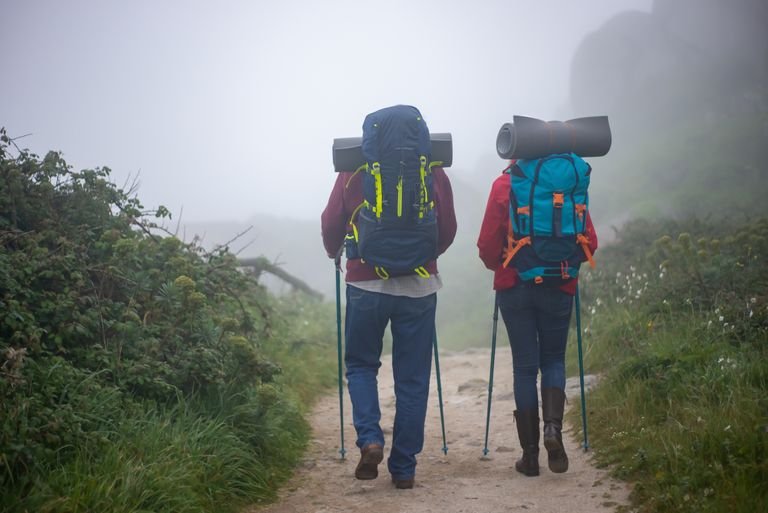
A 30 to 40 litre pack is the right size. Anything bigger just invites you to fill it. Look for a proper hip belt that carries the weight on your hips rather than your shoulders, and a model you have fitted and walked in before the trip.
You do not need a 50 litre pack, and you do not need a tent, a sleeping mat, a stove or a large water reservoir. Those are for wild camping, and you will not be camping. A one litre bottle is enough between villages.
Footwear
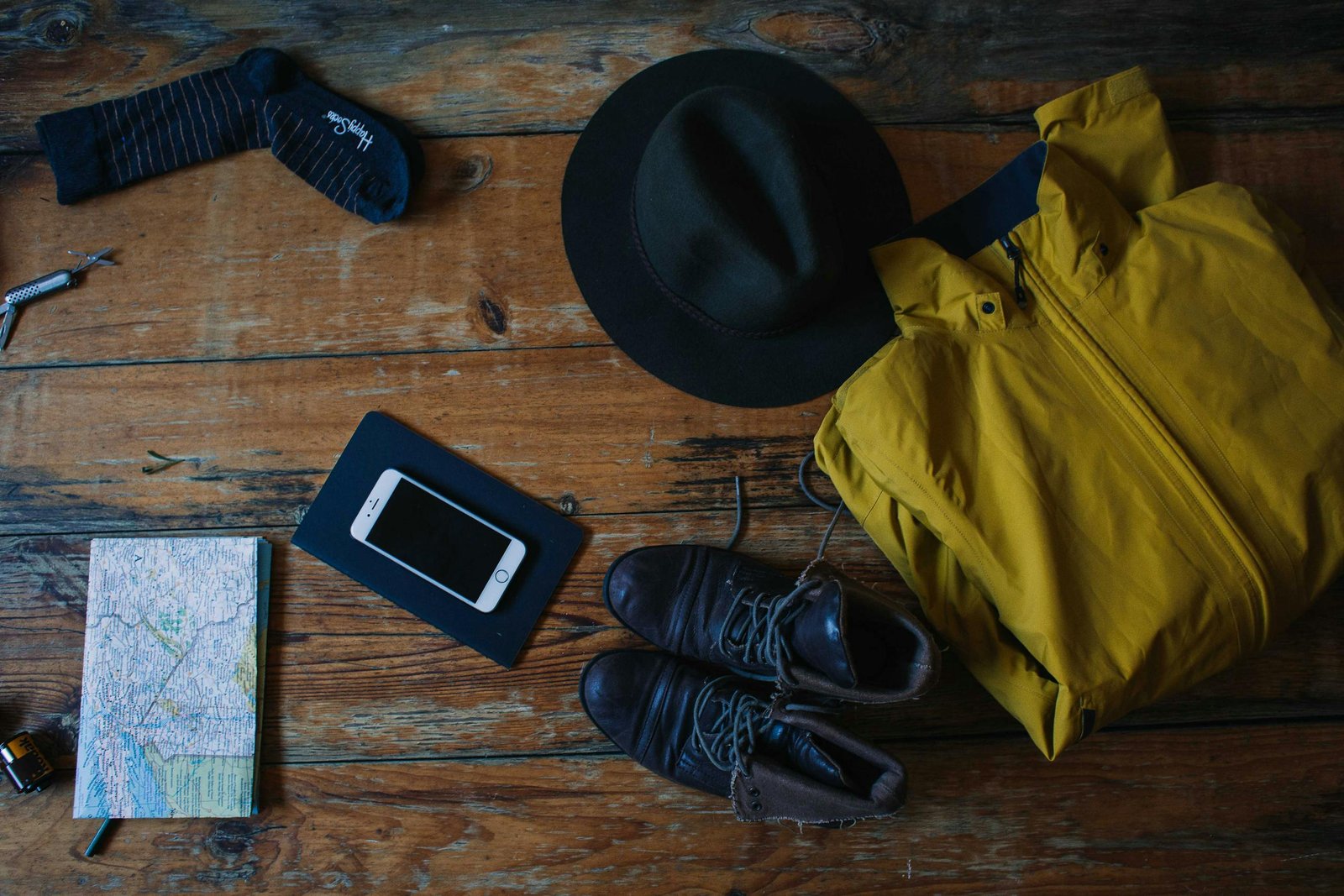
Wear shoes you have already put 40 or more kilometres into. That rules out anything bought the week before you fly. Well-cushioned trail shoes suit most people on the well-graded main routes; light boots make sense if you want ankle support or you are walking in the wet shoulder seasons. Heavy stiff boots are usually more than the terrain needs and hold the heat in summer.
Bring one light second pair, sandals or similar, for the evenings and for letting your feet breathe. Pack a real blister kit: a needle, antiseptic, and blister plasters or tape. Foot care is the single most useful skill on the Camino.
Clothing
Run a two-of-everything system: two shirts, two pairs of socks, two of underwear. One set is on you, the other is washed and drying on the back of your pack. Merino or synthetic, never cotton, because cotton stays wet and rubs.
Add one pair of walking trousers or shorts, a warm layer, a proper rain jacket, a sun hat and sunglasses. For spring or autumn, a light down or synthetic jacket earns its place for cold mornings and higher sections. In high summer you can drop the warm layer to a single thin fleece.
Documents and money
The one document you must carry is the credential, the pilgrim passport you get stamped along the way and present in Santiago. Bring your actual passport, a bank card, and enough cash for the small village bars and the donation-based albergues that do not take cards. If you are entitled to a European health card, bring it, and carry travel insurance regardless.
What I carried, and what I sent ahead
On my second Camino I walked with a detachable daypack of about 10 litres and forwarded the main pack. The daypack held: a small umbrella, a water bottle, my passport, a small camera, my phone, my wallet, and a blister kit. That is genuinely all you need on your back for the walking day, because everything else is available in the shops along the route.
The forwarded pack held: two changes of shirts, underwear and socks, toiletries, camera batteries and chargers, a lightweight silk sleep sack, an inflatable pillow, flip-flops, and a swimsuit.
Luggage forwarding: worth knowing about before you start
Most of the popular routes have a bag transfer service. You leave your pack at your accommodation in the morning with a tag and a few euros, and it is waiting at your next stop that afternoon. On my first Camino a hotel receptionist in Viana do Castelo explained it to us; the cost then was around 6 to 8 euros per bag per day. We tried it the next morning and never went back to carrying the full load.
The trade-off: once your bag is being moved to a named address each day, you have to book your accommodation ahead rather than stopping wherever you happen to be. If part of the appeal of the Camino for you is walking until you feel like stopping, carry your own pack and keep it light instead. There is no wrong answer here, but decide which one you want before you go.
What to leave at home
- Books. Heavy and replaceable. Use your phone.
- A full camera kit. A phone or one small camera is enough. Lenses stay home.
- Full-size toiletries. Small bottles, refilled in towns. A bar of soap does for body, hair and laundry.
- Cotton anything. Shirts, socks, underwear, towel. All of it should be quick-dry.
- “Just in case” spares. A third and fourth of everything. If you genuinely need it, you can buy it that afternoon.
Choosing the pack itself? Camino Backpack Comparisons and Packing Tips →
Frequently asked questions
How much should my Camino pack weigh?
Aim for under 10 percent of your body weight without water, which is usually 6 to 8 kilograms. Weigh it fully loaded before you leave and walk a day with it.
Do I need a sleeping bag?
In summer, a lightweight sleeping bag liner or a silk sleep sack is enough; many albergues provide a disposable sheet. In spring and autumn, carry a light sleeping bag of around 500 to 800 grams. You never need a sleeping mat.
Boots or trail shoes?
Trail shoes for most people on the main routes. Light boots if you want ankle support or are walking in the wet seasons. Whatever you pick, break them in first.
Can I buy things along the way?
Yes. The popular routes pass through a town most days with a pharmacy, an outdoor shop or a supermarket. Pack for the walk, not for every contingency.
Do I have to carry my own bag?
No. Bag transfer services run on most popular routes for a few euros a day. If you use one, book your accommodation ahead, because your bag needs a fixed destination each night.
Where to go next
Deciding on the pack itself? See Camino Backpack Comparisons and Packing Tips. Wondering about poles? Read Are Hiking Poles Essential for the Camino or Kumano Kodo?. Working out where to sleep each night? See Best Places to Stay on the Camino de Santiago. More pilgrimage planning sits on the Pilgrimages and Scenic Walks hub.
This article is for informational and educational purposes only. Always verify current travel requirements with official government sources before making travel decisions.
Partner resource. We may earn a commissionBook Camino accommodation ahead (Booking.com) →