
Note: This site participates in the Amazon Affiliates and other affiliate partner programs at no cost to you. Visiting an affiliate partner site may result in this site receiving a commission. For more information visit our Affiliate Disclosure page.
Osaka is Japan’s second city and its best place to eat. It has fewer marquee sights than Tokyo or Kyoto, which is exactly why people who like it, like it a lot. It is louder, cheaper, more direct, and it makes an excellent base for the whole Kansai region.
The short answer
Come for the food and the nightlife, and use Osaka as a hub for Kyoto, Nara, Kobe and Himeji. Two nights is enough for the city itself. If you are basing yourself in Kansai for longer, Osaka is a stronger choice than Kyoto for value, transport links and evening life.
The food
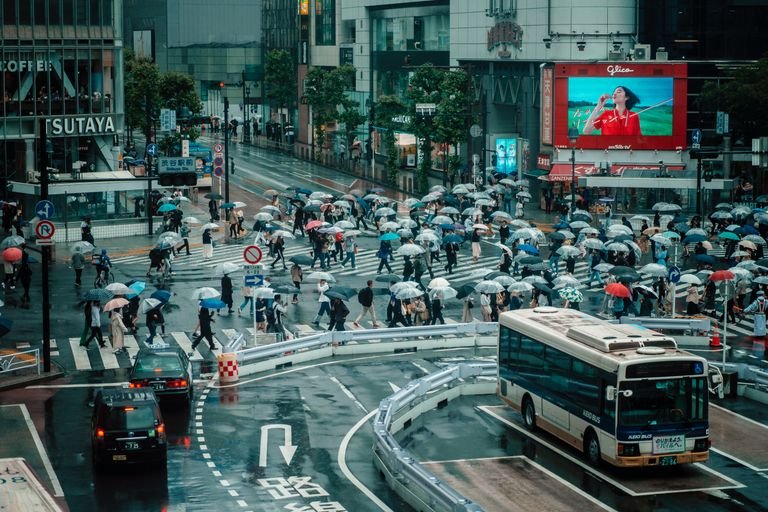
Osaka’s nickname is tenka no daidokoro, the nation’s kitchen. The local specialities are street food: takoyaki (octopus dumplings), okonomiyaki (a savoury pancake, mixed rather than layered as in Hiroshima), and kushikatsu (crumbed skewers, deep-fried, one communal sauce pot you do not double-dip). The Kuromon Ichiba market is the daytime version; Dotonbori is the neon-lit night version, with the running-man Glico sign and canals full of reflected light.
We walked Dotonbori in the early evening and it was amazing: huge lit-up signs, crowds along both sides of the canal, and food of every kind within a few steps. We did not eat right on the canal. We found a small, family-run conveyor-belt sushi restaurant in the general area, where the chef stood in front of the customers and prepared each piece in view before putting it on the belt. Watching him work was part of the meal. A larger chain such as Kura Sushi, which we tried near Umeda, hides the kitchen: the plates seem to appear from the back and circle the whole room on a belt along the wall before disappearing again. Both meals were excellent, but watching the chef at the small place made it feel like a special event.
Dotonbori and Namba
The Dotonbori and Namba area is the centre of gravity for a first visit: covered shopping arcades, standing bars, game arcades, and a restaurant on every floor of every building. It is busy and unpretentious, and it is the clearest expression of the city’s character.
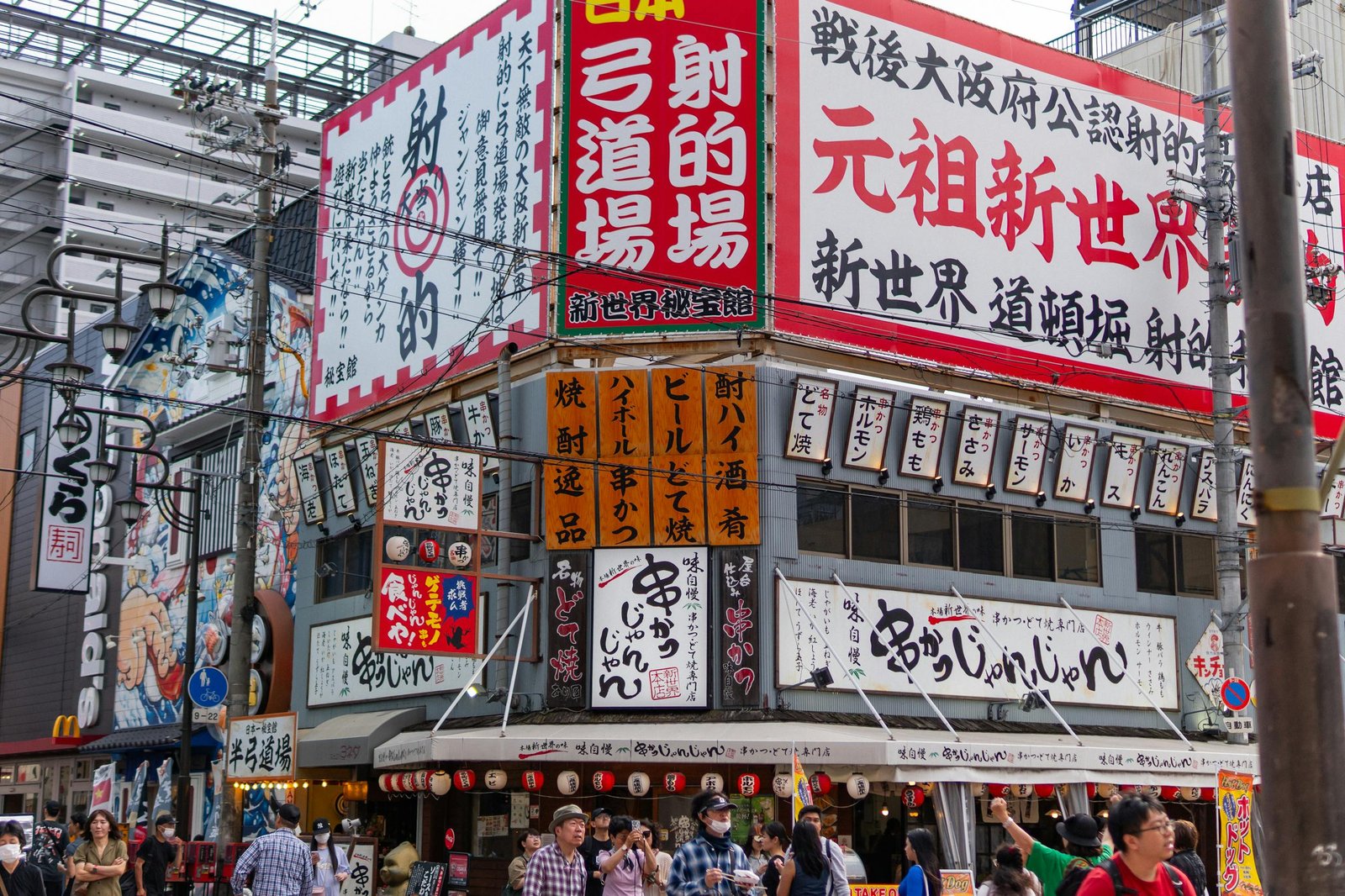
South of there, Shinsekai is an older, scruffier entertainment district built in the early 1900s around the Tsutenkaku tower, and it is the home of kushikatsu. Osaka has a reputation within Japan for being blunter, funnier and quicker to talk to strangers than Tokyo, and Shinsekai is where that comes across most clearly.
Deciding on the whole trip? 10 Reasons to Visit Japan →
The sights that are worth it
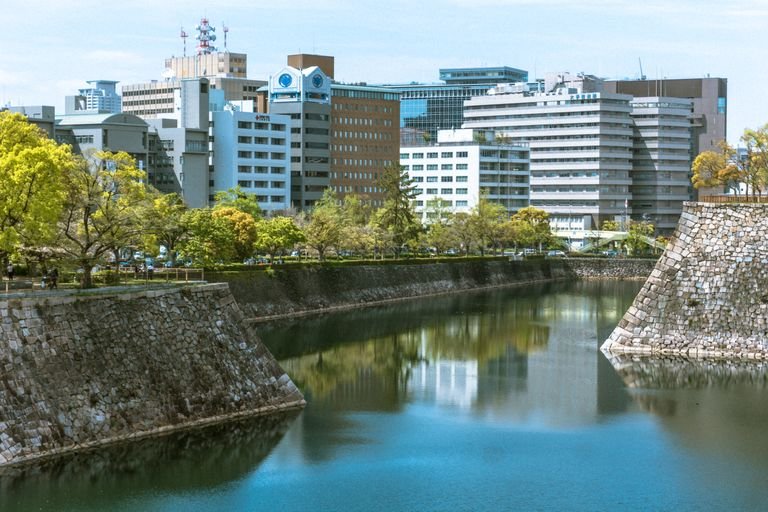
- Osaka Castle. A reconstruction, but the grounds and moat are extensive and the keep has an observation floor. We stayed outside and walked the grounds and the moat. In May it was fairly busy in the middle of the day, though not overly so for the season; in January it was cold enough that we kept the walk short.
- Umeda. We spent time in the department stores and exploring the huge station, and found a good meal at Kura Sushi. The Umeda Sky Building, which we did not go up, has the Floating Garden Observatory, an open-air ring 170 metres up, linked by an exposed escalator across the gap between the two towers. Better at sunset.
- Osaka Aquarium Kaiyukan. One of the largest aquariums in the world, built around a central tank with whale sharks, and good with children. We skipped it because we had seen other aquariums and wanted the time for things we could only do in Japan. If you have not been to a big aquarium, it is a reasonable choice.
- Universal Studios Japan. A major draw in its own right, with the Super Nintendo World area. If it is on your list, give it a full day and book ahead. We skipped the theme parks, having been to plenty in the United States, and spent the time on sights that are particular to Japan.
The Kansai base
From Osaka, Kyoto is about 15 minutes by rapid train, Nara around 45, Kobe 20, and Himeji and its castle under an hour. You can stay in one Osaka hotel and day-trip to all of them, which often works out cheaper and easier than moving between them. Kansai Airport connects directly to central Osaka by train.
Getting to Osaka
We visited twice and arrived differently each time. The first time we came by train from Tokyo and stayed near Shin-Osaka station, then took local trains into the centre. The second time we flew into Kansai International and took the train into the city, to a hotel near Osaka Station. The airport leg is easy: find the ticket kiosk inside the airport, buy your ticket, go to the station, wait for the right train on the correct line, and ride to Osaka Station. Signs throughout the stations are in English and Japanese, or at least Japanese with clear pictures, which makes the stations easy to get around.
How we did Osaka
We have been to Osaka twice, in January and in May, both times as part of walking the Kumano Kodo. In January we added a trip over to Kyoto to walk some of its historic sites. In May we came back to finish the Kumano Kodo sections that snow and cold had stopped us from doing. January in the city was cold, so we spent less time outdoors.
On both visits we got around mostly by metro with an ICOCA card, with the occasional bus and a lot of walking. Buying individual JR tickets was easy too: the station kiosks have an English option and take cash or card. We picked hotels close to a train station and near a grocery store or at least a 7-Eleven, so we could eat easily without relying on sit-down restaurants for every meal.
If you only have one day
See Osaka Castle and the Dotonbori area, and make sure you eat sushi. Skip the aquarium unless you have not been to a big one, since aquariums are easy to find elsewhere. Go to the castle earlier rather than at midday if you can, and save Dotonbori for the early evening, when the signs are lit and the canal is at its best.
Frequently asked questions
Is Osaka worth visiting?
Yes, especially for food and as a regional base. It has fewer headline attractions than Tokyo or Kyoto, but the eating, the nightlife and the transport links make it a strong two-night stop and an efficient hub for the rest of Kansai.
Should I base myself in Osaka or Kyoto?
Osaka for value, evening life and transport connections; Kyoto if temples and a historic atmosphere are your priority and you do not mind higher prices. Both put the whole Kansai region within day-trip range.
How many days do you need in Osaka?
Two nights for the city. Add more only if you are using it as a base for Kyoto, Nara, Kobe and Himeji rather than seeing them on the way through.
When is the best time to visit Osaka?
March to May and October to November for mild weather. Summer is hot and humid; winter is cold but clear and quieter.
How do I get from Kansai Airport to Osaka?
By train. Buy a ticket at the kiosk in the airport, go to the station and take the train on the correct line to Osaka Station. We found it straightforward, with signs in English and Japanese.
Where to go next
For the wider case, read 10 reasons to visit Japan and why visit Tokyo. To plan the transport, see getting around Japan without a car. Everything we have written on the country sits on the Japan hub.
This article is for informational and educational purposes only. Always verify current travel requirements with official government sources before making travel decisions.
Partner resource. We may earn a commissionBook Osaka attractions & passes (Klook) →