
Note: This site participates in the Amazon Affiliates and other affiliate partner programs at no cost to you. Visiting an affiliate partner site may result in this site receiving a commission. For more information visit our Affiliate Disclosure page.
Porto is Portugal’s second city, built on steep granite banks where the Douro river meets the Atlantic. It is compact, walkable if your knees are up to the hills, and the centre is small enough to see the main sights in two full days. It is also the traditional starting point of the Portuguese Camino, so a good number of visitors are here for a night or two before walking north.
This is what to prioritise, and a few things the guides tend to get wrong.
The short answer
Base yourself near the Aliados avenue or the Ribeira and see the city on foot. Walk the riverfront and cross the upper deck of the Dom Luis I bridge for the view. Visit the Se cathedral, the Clerigos tower and Sao Bento station, book Livraria Lello ahead if you want to see it, and cross to Vila Nova de Gaia for a port tasting. Two days covers it; three lets you slow down.
Getting your bearings
The airport is connected to the centre by metro line E (purple), about 30 minutes to the Trindade or Aliados stops. From there the historic core runs downhill to the river. Sao Bento is the central train station and a sight in its own right, its entrance hall lined with around 20,000 blue and white azulejo tiles showing scenes from Portuguese history.
Porto is hilly. The Ribeira, the old riverside quarter, sits at the bottom; the cathedral, the shopping streets and Lello are up top. You will climb between them repeatedly. Wear proper shoes, and use the funicular dos Guindais or the metro over the bridge to save your legs where you can.
The river and the Dom Luis I bridge
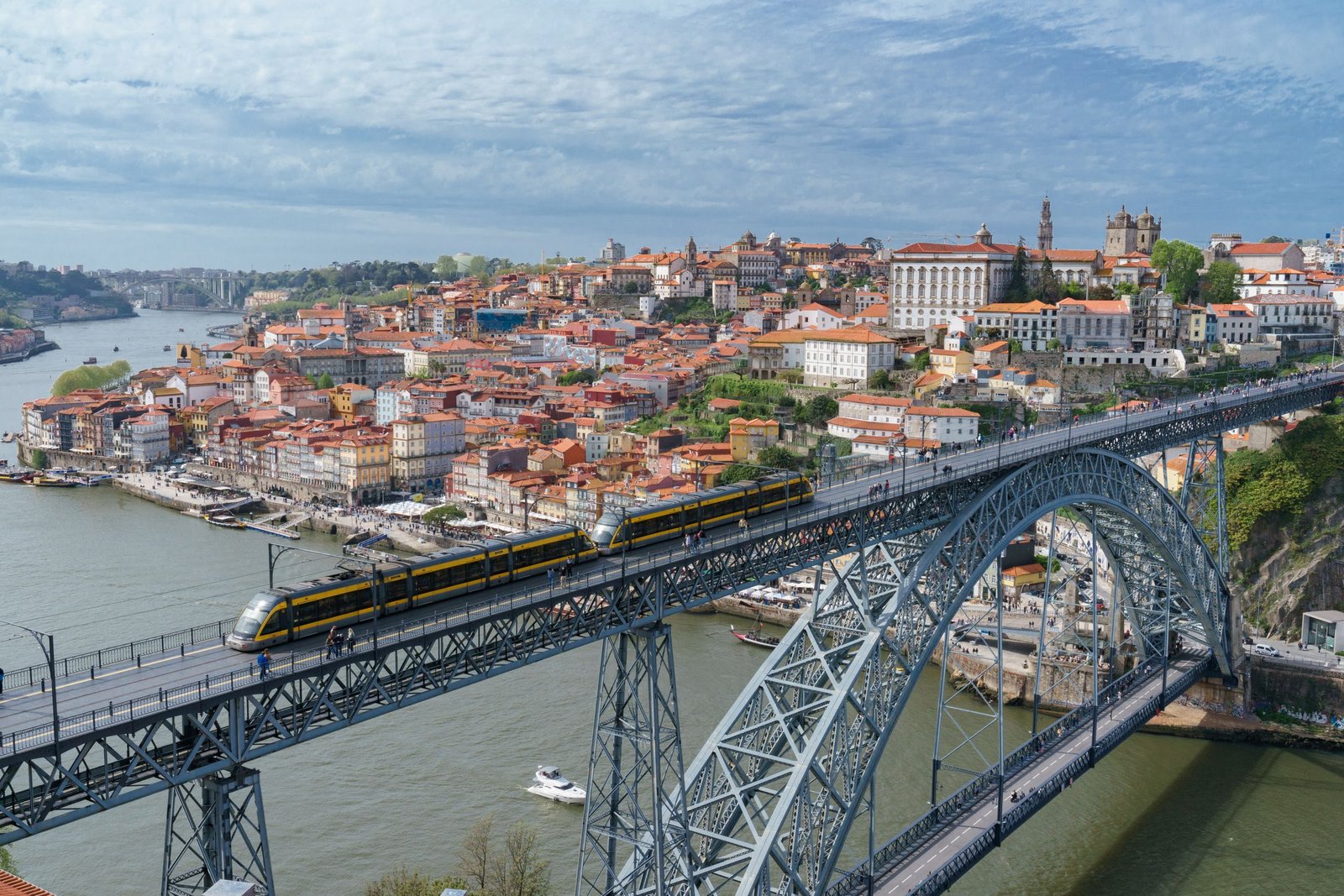
The Ribeira waterfront is the heart of the city: a row of tall, narrow, tiled houses, cafe tables along the quay, and the Douro running past. Spend some time here, then walk across the Dom Luis I bridge. The double-deck iron arch, completed in 1886, carries the metro and pedestrians on the upper level and road traffic below. The walk across the top deck gives you the best single view in Porto, back over the Ribeira with the river bending away below.
On both of my visits, before starting the Camino, I spent an afternoon down by the river and walked over the bridge just for the scenery. It is worth doing at the end of the day, when the light is low on the water.
The Se, and the start of the Camino
The Se, Porto’s fortress-like Romanesque cathedral, sits on the highest point of the old town with a wide terrace looking over the rooftops. It is free to enter the main church; the Gothic cloister with its tiled walls has a small charge.
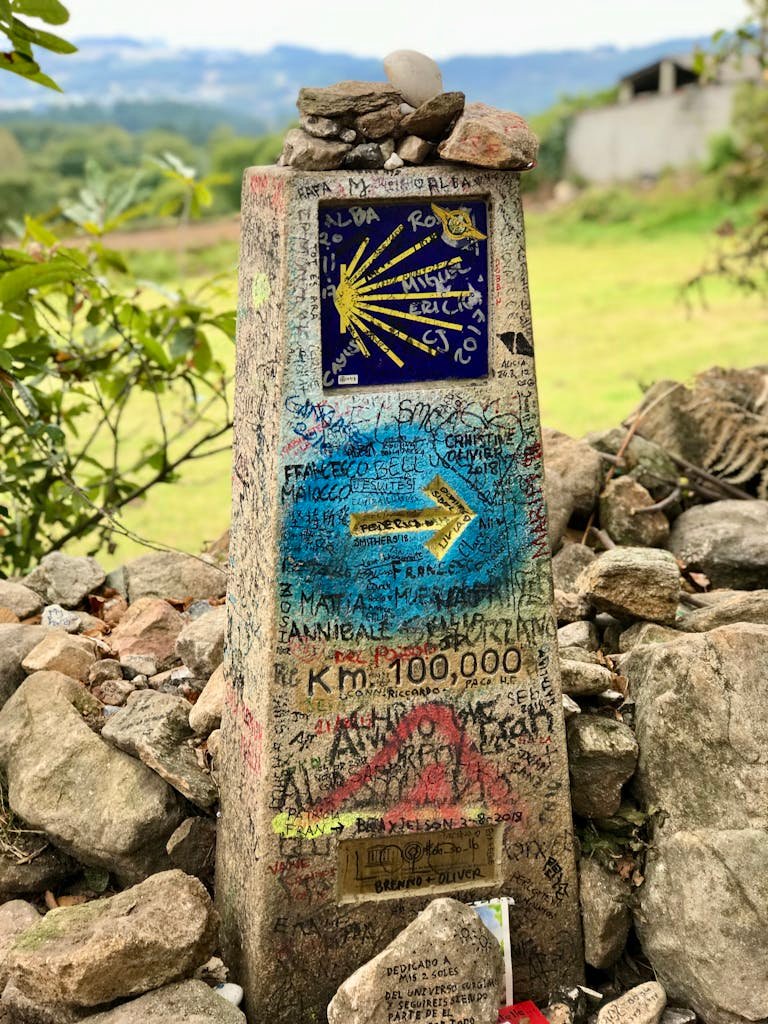
For pilgrims, the Se is also a natural starting point for the Portuguese Camino: you can pick up a credential, the pilgrim passport you get stamped along the way, here before you set off. I did exactly that on both of my walks, collecting the credential booklet at the cathedral the day before leaving Porto on foot.
Livraria Lello, Clerigos and the old centre
Livraria Lello is a working bookshop from 1906 with a carved wooden interior, a stained-glass skylight and a curling red staircase. It is genuinely beautiful and consistently packed. Entry is ticketed now, bought online for a set time, and the ticket price is redeemable against a book. Go at opening or near closing if you can.
A few minutes away, the Clerigos tower rises 75 metres over a Baroque church by the architect Nicolau Nasoni. The climb up the narrow stair is rewarded with a full circle over the city and the river. Nearby, the Palacio da Bolsa, the old stock exchange, can be seen on a guided tour, and the Sao Francisco church next door has an interior almost entirely covered in gilded woodwork.
Port wine in Vila Nova de Gaia
One point the guidebooks blur: the port wine lodges are not in Porto. They are across the river in Vila Nova de Gaia, a separate city, reached on foot over the lower deck of the Dom Luis I bridge or by the metro. The big houses, Sandeman, Graham’s, Taylor’s, Ferreira and others, run cellar tours ending in a tasting, and the Gaia waterfront has its own row of restaurants looking back at Porto.
Further out
If you have a third day: the Serralves Museum of Contemporary Art, with a building by Alvaro Siza and large gardens; the Casa da Musica concert hall, a striking Rem Koolhaas design from 2005 with guided tours; the gardens of the Palacio de Cristal above the river; and the beach and seafood restaurants at Matosinhos, at the end of metro line A.
What to eat
Porto’s signature dish is the francesinha: a layered sandwich of cured meats and steak under melted cheese, in a hot beer-and-tomato sauce, usually with fries and often a fried egg on top. My companion on the first Camino had one and rated it; it is heavy going in the heat but hard to skip. I had ovos rotos for lunch instead, a runny fried egg broken over a pile of fries. Beyond that: a simple bifana pork sandwich, tripas a moda do Porto if you are curious about the dish the locals are nicknamed for, and a glass of Douro red rather than port with a meal.
Starting the Camino from here? Best Places to Stay on the Camino de Santiago →
Frequently asked questions
How many days do you need in Porto?
Two full days for the main sights, three if you want the Serralves museum, the beach, or a slower pace.
Is Porto walkable?
Yes, but it is steep. The centre is small and best seen on foot, with the metro and the funicular to spare your legs on the climbs between the river and the upper town.
Should I do the port tasting in Porto or Gaia?
Gaia. The cellars are all on the south bank in Vila Nova de Gaia, a short walk across the bridge.
Do I need to book Livraria Lello?
Yes. Entry is by timed ticket bought online, and the price comes off a book if you buy one. It is busiest in the middle of the day.
When is the best time to visit?
Late spring and early autumn for mild weather and lighter crowds. Summer is hot and busy; winter is quiet and often wet.
Where to go next
Walking the Portuguese Camino from here? See the Camino de Santiago Packing List and Best Places to Stay on the Camino. Considering the route from Lisbon instead? Read How to Walk the Camino from Lisbon. Everything we have written on the country sits on the Portugal hub.
This article is for informational and educational purposes only. Always verify current travel requirements with official government sources before making travel decisions.
Partner resource. We may earn a commissionBook Porto tours & tickets (Viator) →