Note: This site participates in the Amazon Affiliates and other affiliate partner programs at no cost to you. Visiting an affiliate partner site may result in this site receiving a commission. For more information visit our Affiliate Disclosure page.
Imagine standing beneath the Lincoln Memorial at sunrise, the National Mall still cloaked in a hush of early light. A woman in a red coat walks past, clutching a free map from a kiosk, her footsteps echoing off the marble columns. To the east, the Capitol dome glimmers under security lights, while to the west, the Washington Monument pierces the sky like an obelisk of glass. This is Washington D.C. at its most unguarded—a city where history, art, and democracy unfold not behind ticket counters, but in the open air. Over 27 million people visit D.C. annually, yet few realize that nearly 80% of the city’s most iconic attractions are free. From the Smithsonian’s moon rock to the hidden echo chamber of the Einstein Monument, the nation’s capital is a masterclass in accessible grandeur.
Monuments and Memorials: Standing at the Heart of History
The National Mall is not a park—it’s a stage. Every statue, flagpole, and reflecting pool there tells a story, and the best part is that the show is always free. Start at the Lincoln Memorial, where Abraham Lincoln’s imposing 19-foot marble figure gazes across the Tidal Basin. Bring a book of poetry and read “The Gettysburg Address” aloud; the acoustics amplify Lincoln’s words as if they’re still echoing from the Civil War era. Nearby, the Vietnam Veterans Memorial cuts into the earth like a wound, its black granite etched with over 58,000 names. Visitors leave handwritten notes and poppies in a quiet ritual of remembrance.
For a haunting experience, visit the Korean War Veterans Memorial at dusk. Nineteen bronze soldiers stand frozen in patrol, their faces turned toward a reflective wall that mimics a battlefield’s chaos. As night falls, LED lights cast long shadows, transforming the plaza into a living diorama of war. A Reddit user and licensed guide raves about this spot: “Approach each statue and look into their eyes. You’ll feel like you’re walking into a soldier’s soul.” The memorial’s design—juniper bushes for terrain, poncho-draped figures for weather realism—makes it one of the most visceral memorials in the city.
Don’t overlook the Einstein Monument across from the Vietnam Memorial. This bronze statue of the physicist, flanked by equations and a sunburst of solar flares, is a hidden gem. Stand in the center of its circular platform and whisper. The sound bounces off the curved granite, creating an echo that feels like a conversation with the man himself. The monument’s plaque explains how Einstein’s theories influenced everything from GPS satellites to D.C.’s own power grid, a subtle reminder that science and history are inextricable here.
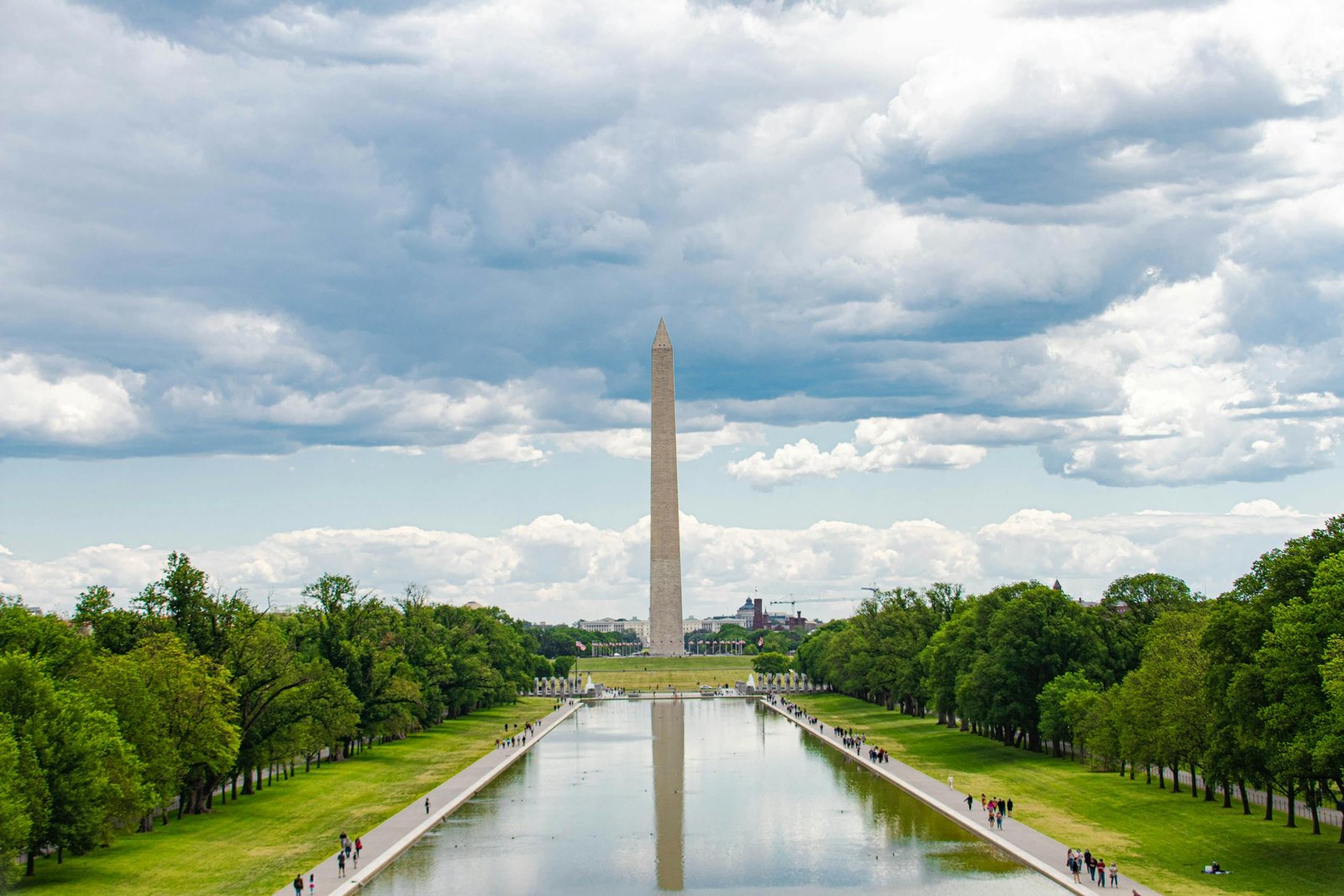
As the sun sets, the Washington Monument becomes a beacon. Climb its 898 steps for free (though a timed ticket is required), or admire it from the Reflecting Pool. The monument’s stone is sourced from Maryland, Virginia, and Massachusetts—a literal pillar of union. If you’re there during the holidays, you might catch the “Monument Light Show,” where LED panels wrap the obelisk in cascading colors. It’s a spectacle that turns a neoclassical relic into a 21st-century wonder.
The Smithsonian Complex: A World of Free Knowledge
James Smithson, an Englishman who never set foot in America, left his fortune to create an institution “for the increase and diffusion of knowledge.” Today, the Smithsonian is a 19-museum behemoth, from the National Museum of Natural History’s Hope Diamond to the Air and Space Museum’s moon rock. The Udvar-Hazy Center, a satellite facility near Dulles Airport, houses artifacts too large for the Mall, including the Enola Gay and a Concorde jet. Parking is a pain, but the free access is worth it: You can stand beneath the Wright brothers’ Flyer, the same aircraft that launched modern flight, and not pay a dime.
The National Museum of Natural History is a labyrinth of wonders. Spend hours in the Hall of Human Origins, where Lucy’s skeleton is displayed next to a 3D hologram of her skeleton in motion. The Hall of Mammals includes a diorama of a baby elephant in Africa, its ears flapping in mid-sprint. The gem and mineral gift shop is legendary—stock up on “Hope Diamond” earrings or a “Jurassic Park”-style T-Rex tooth keychain. For families, the Q?rius interactive lab lets kids dig for fossils and analyze “crime scenes” using forensic tools.
The National Gallery of Art, though not a Smithsonian, is equally free. Its East Building, designed by I. M. Pei, is a modernist marvel with pink Tennessee marble and no right angles. The West Building houses Leonardo da Vinci’s *Ginevra de’ Bardi*, the only da Vinci in the Western Hemisphere. Between the two buildings, the underground cafeteria offers salads for $10 and views of the Sculpture Garden. A Reddit user recommends the museum’s free Sunday lectures—once, a conservator demonstrated how to restore a 15th-century painting using a hair dryer and distilled water.
For the politically inclined, the National Museum of American History is a treasure trove. See Abraham Lincoln’s top hat, the original Star-Spangled Banner, and a life-sized replica of the Apollo 11 command module. The museum’s “First Ladies” exhibit includes Jackie Kennedy’s pink pillbox hat and Michelle Obama’s 2013 inaugural gown. It’s a reminder that history isn’t just dates and battles—it’s also fashion, food, and the quiet resilience of everyday people.
Capitol Hill and Beyond: Walking Through Democracy
Capitol Hill is where the rubber meets the road—or at least where the marble meets the document. The U.S. Capitol, with its iconic dome, offers free tours that begin at the Capitol Visitor Center. The building’s security is infamous: no bottled water, no scissors, and absolutely no phones. A Reddit guide warns, “They’ll throw away your sunscreen if you don’t have a doctor’s note.” But the reward is worth it: You’ll walk through the House and Senate chambers, where laws are still debated under gilded ceilings. The Capitol’s tunnel to the Library of Congress is a hidden perk; the Jefferson Building’s gilded reading room feels like a cathedral of knowledge, complete with a 50-foot fresco of Parnassus, the mythical home of poets and sages.
The Supreme Court, just a block from the Capitol, is another free stop. The building’s exterior is a blend of neoclassical and modernist styles, but the real magic is in the courtroom. If the Court is in session, you can sit in the public gallery and watch justices in black robes debate cases that will shape the nation. The Court’s free podcast archives let you relive landmark cases like *Brown v. Board of Education* from your hotel room.
For a quieter experience, visit the National Archives in Foggy Bottom. Here, you’ll see the original Declaration of Independence, the Constitution, and the Bill of Rights. The building itself is a work of art, with a rotunda floor patterned after the Lincoln Memorial. A Reddit user notes that the Archives’ “Charters of Freedom” exhibit uses ultraviolet lighting to prevent fading, a detail most tourists miss. Afterward, stroll down Pennsylvania Avenue to the White House, where the changing of the Marine Corps guard is a free spectacle of precision and pageantry.
Hidden Gems: Washington D.C.’s Best-Kept Secrets
Beyond the Mall, D.C. hides jewels like the Basilica of the National Shrine of the Immaculate Conception. This Gothic Revival cathedral, with its 295-foot spire, is adorned with over 45,000 mosaic tiles. The Shrine of the Sacred Heart, a Russian Orthodox chapel, and the Italian Chapel of the Immaculate Conception all exist under one roof. The basilica’s mosaics are so intricate that you’ll need a magnifying glass to see the individual glass pieces. A Reddit guide calls it “DC’s best-kept secret”—and for good reason; most visitors rush past to the Lincoln Memorial and miss this spiritual masterpiece.
The National Cathedral, though technically free, is often overlooked in favor of its more famous neighbor. Its 500-foot spire dominates the skyline, and the interior’s flying buttresses and rose windows are a feast for the eyes. The cathedral’s “Rising Garden” offers a panoramic view of the city, and the free Sunday concerts in the nave are a treat. During the holidays, the cathedral hosts a free “Carol of the Bells” sing-along that draws crowds from across the city.
For a different kind of escape, visit the National Arboretum in northeast D.C. This 446-acre oasis features the “Tropicana” palm tree maze and the “Sinojapanese Bridge,” which arcs over a koi pond. The arboretum’s free guided tours explain how the Franklin Delano Roosevelt Tree, a 200-year-old tulip poplar, survived the Civil War and now stands as a symbol of resilience. If you’re a birdwatcher, bring binoculars: The arboretum is a migratory hotspot for warblers and hawks.
Dining on the National Mall: Savoring the City for Free
After a day of walking, you’ll need sustenance—but D.C. offers free food options that rival paid restaurants. The National Museum of the American Indian’s food court is a standout, serving Navajo tacos and Cherokee stovetop cornbread. The museum’s “First Nations” market lets you sample indigenous dishes from across the Americas, all at museum-food prices. A Reddit user swears by the “Three Sisters” plate—corn, beans, and squash served with maple syrup.
For a quick bite, head to the Old Ebbitt Grill, a 1856 tavern that’s survived wars, fires, and even a presidential assassination plot (John Wilkes Booth dined here). The “Old Ebbitt” oyster stew, made with shucked oysters and sherry, is a D.C. tradition. If you’re on a budget, share a half-order with friends—it’s more than enough to fuel your next museum visit. The Hill Country BBQ in Penn Quarter is another gem; their ribs, smoky and fall-off-the-bone tender, are worth the line.
The Kennedy Center’s Millennium Stage offers free nightly performances, from jazz ensembles to spoken-word poets. Arrive early for a seat, or stand in the back and let the music wash over you. A Reddit guide notes that the Center’s free “Sounds of D.C.” series often features local legends like Chuck Brown, the godfather of go-go music. Afterward, walk down 14th Street NW for happy-hour specials at bars like the Tenleytown Ale House, where $5 pints and live trivia make for a perfect end to the day.
FAQ: Your Guide to Washington D.C.’s Free Attractions
Are all Smithsonian museums free? Yes. The entire Smithsonian Institution, including the National Zoo and Udvar-Hazy Center, is free. However, some satellite locations, like the National Museum of African Art, require timed entry reservations during peak season.
How do I get tickets for the Capitol tours? Reserve free tickets online at visitthecapitol.gov up to six months in advance. If you arrive without a reservation, walk-up tickets are available every 10 minutes, but they sell out quickly during peak hours.
Can I visit the Supreme Court without a tour? Yes. The Supreme Court allows self-guided visits to its public areas, including the Great Hall and courtroom. Check the Court’s schedule to see if justices are in session for public viewing.
What’s the best time to visit the National Mall? Early mornings (before 9 AM) and late afternoons (after 4 PM) are ideal for avoiding crowds. For memorials with sunset views, the Korean War Veterans Memorial and Lincoln Memorial are particularly magical just before dusk.
This article is for informational and educational purposes only. Always verify current travel information, visa requirements, entry rules, and health guidance with official government sources and qualified professionals before making travel decisions.