
Note: This site participates in the Amazon Affiliates and other affiliate partner programs at no cost to you. Visiting an affiliate partner site may result in this site receiving a commission. For more information visit our Affiliate Disclosure page.
Flying with trekking poles comes down to one rule: they go in checked baggage, never in your carry-on. Airport security treats a pole as a pointed, extendable object and will not let it through to the cabin. Everything else is just packing them so they arrive undamaged and do not cost you an extra bag fee.
The short answer
Collapse or take your poles apart, pack them inside your main checked bag rather than in a separate one, and wrap the tips. If you would rather not fly with them at all, buy a cheap pair at your destination or rent them, which is common on routes like the Kumano Kodo.
The rule: checked baggage only
The US Transportation Security Administration lists trekking poles as permitted in checked bags and prohibited in carry-on, and most airlines worldwide apply the same line. The reasoning is the same as for tent stakes, ice axes and other pointed or extendable gear: it is not allowed in the cabin.
The one exception is a pole used as a genuine mobility aid. A walking stick or cane that a passenger needs to move around is treated as an assistive device and is allowed through security and on board. That does not extend to a pair of sport trekking poles packed with your hiking kit.
How to pack them
Folding poles, the kind that break into three or four short sections joined by an internal cord, pack down to around 35 to 40 centimetres and fit inside most backpacks and duffels. Telescoping poles collapse to around 60 to 65 centimetres and may need to lie diagonally in a larger checked bag.
Pack the poles inside your main checked bag, not in a separate bag of their own, so you are not paying a second checked-bag fee for two lengths of aluminium. Slide them down the middle of the pack with your clothing wrapped around them, and put the rubber tip covers on so the carbide points do not tear the fabric or your other gear.
How I did it
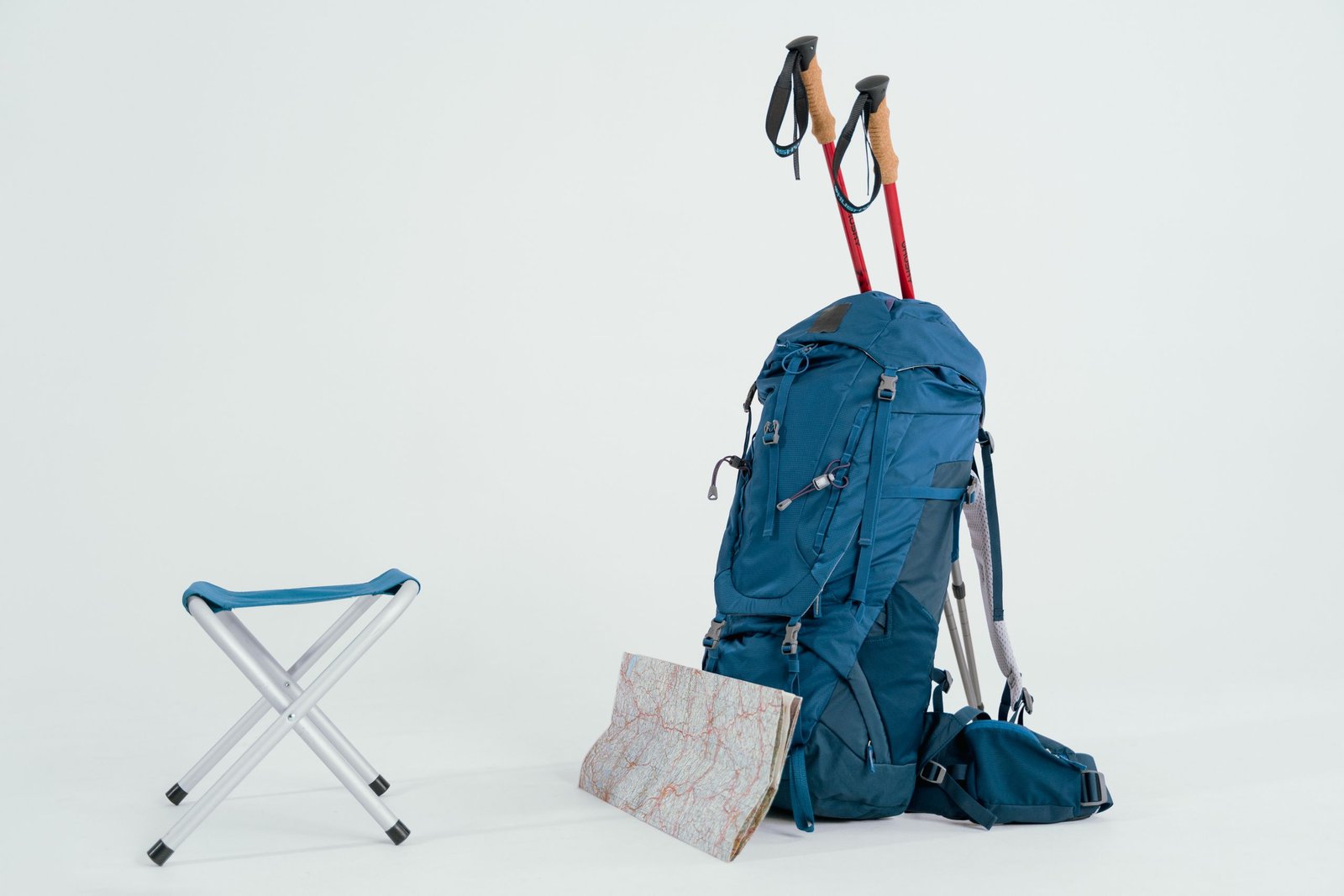
To fly to Spain for the Camino, and to Japan for the Kumano Kodo, I disassembled my poles into their separate sections and packed them down the centre of my 40 litre backpack, which I checked. Taking them fully apart was the only way to get them to fit inside the pack rather than strapped to the outside, where they can be pulled off or bent by baggage handling. Checking the bag, rather than trying to carry the poles on, is what guarantees they are actually with you when you land.
Not sure poles are worth carrying at all? Are Hiking Poles Essential for the Camino or Kumano Kodo? →
The alternatives to flying with poles
- Buy them there. On the Camino, cheap poles and traditional wooden staffs are sold in Saint-Jean-Pied-de-Port and the early towns. Use them for the walk and leave them behind or pass them on.
- Rent them. Guesthouses and outdoor shops in the Kumano region rent trekking poles by the day, so you can arrive with none.
- Ship them ahead. If you have a fixed first-night address, posting the poles to it can be cheaper and less hassle than a checked bag, though customs on an international parcel can complicate this.
Frequently asked questions
Can I bring trekking poles in my carry-on?
No. Security will not allow them into the cabin. They must go in a checked bag.
What if I use a pole to walk because of an injury?
A cane or walking stick used as a mobility aid is allowed through security and on board as an assistive device. A pair of sport trekking poles packed with hiking gear is not.
Will airport security flag my checked poles?
They may be screened, but poles are permitted in checked baggage, so there is nothing to explain or declare. Pack them so they are easy to identify if a bag is opened.
Do poles get damaged in checked luggage?
Rarely, if they are inside your bag rather than strapped to the outside. Poles left on the outside of a pack are the ones that come back bent or missing.
Where to go next
Deciding whether to bring poles in the first place? Read Are Hiking Poles Essential for the Camino or Kumano Kodo?. Working on the rest of your kit? See the Camino de Santiago Packing List. More planning sits on the Pilgrimages and Scenic Walks hub.
This article is for informational and educational purposes only. Always verify current travel requirements with official government sources before making travel decisions.
Partner resource. We may earn a commissionSearch flights (Aviasales) →