
Note: This site participates in the Amazon Affiliates and other affiliate partner programs at no cost to you. Visiting an affiliate partner site may result in this site receiving a commission. For more information visit our Affiliate Disclosure page.
The Camino de Santiago can feel daunting before you start. I know, because I have walked it twice, both times on the Portuguese Coastal route, and the first time I had a lot of questions. This guide covers what I would tell a first-timer: how to choose a route, what to carry, where to sleep, how to handle your credential, and what happens at the end in Santiago.
Choosing Your Route
The Camino is a network of routes that all lead to Santiago de Compostela. The Camino Francés is the best known. The Camino del Norte follows the northern coast, and the Camino Portugués starts in Portugal and comes in two main versions, a central route and a coastal route. Distances and conditions differ a lot between them, so pick based on how much time you have and what kind of walk you want.
I can speak only to the Portuguese Coastal route. My first walk went north from Porto to Santiago in 21 days, covering more than 280 km. My second started at Viana do Castelo, and I took breaks off the trail to see Valença and its walled city and to spend a few days in Vigo, including a ferry trip to the Cíes Islands. For any other route, check a route-specific guide.
Getting to the Start
Both times I flew into Porto and spent a day or two there before walking. I took local transport from the airport to my hotel, then explored the city on foot and by local transport. I spent time along the river by the Ponte Dom Luís I and walked across it for the views. On my second trip I traveled on to Viana do Castelo by local transport, via Braga.
Porto is also where I picked up my credential, the pilgrim passport that you stamp along the way. I got mine at the Sé (Porto Cathedral) on both trips. See our Porto guide for more on the city.
What to Carry, and What to Forward
On my first walk, my companion and I carried full-size packs every day. We managed only 10 to 15 km a day, and we were tired and sore after roughly 20,000 steps. At Viana do Castelo, a hotel staff member explained the luggage-forwarding service, which then cost about €6 to €8 a day. We tried it the next day and arrived far less tired. With only the detachable daypack of about 10 L, we comfortably walked 15 to 20 km a day.
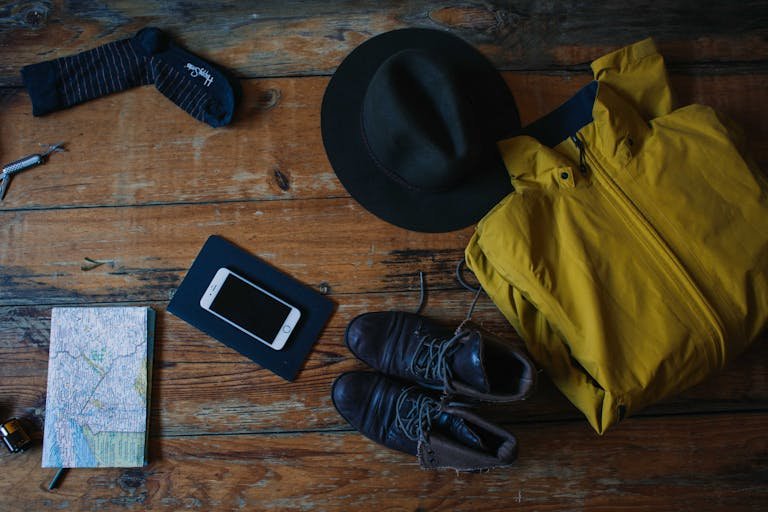
On my second walk I used luggage forwarding every single day. My daypack held a small umbrella, a water bottle, my passport, a small camera, my phone, my wallet and a blister kit. I figured I could buy most other supplies in the small-town shops along the route. The bag I forwarded held two changes of pants, underwear, shirts and socks, toiletries, camera batteries and chargers, a lightweight silk-type sleep sack, an inflatable pillow, flip-flops and a swimsuit.
Prices and services can change, so ask at your hotel and check current rates. See our Camino packing list for more.
Footwear and Poles
I wore waterproof boots on my first walk and trail running shoes with a stone-blocker sole on my second, and I prefer the trail runners. The full comparison is in our Camino footwear guide.
I brought hiking poles on both walks and strapped them to the outside of my pack. Most of the Portuguese Coastal route does not need them, but a few wooded stretches turn rocky, slippery and steep, and there they were very useful. More in Hiking Poles: Worth the Hype?.
Where to Sleep
Prices and availability on the Camino change fast, especially around peak season. Here’s a live look at what’s available for your dates. Booking.com
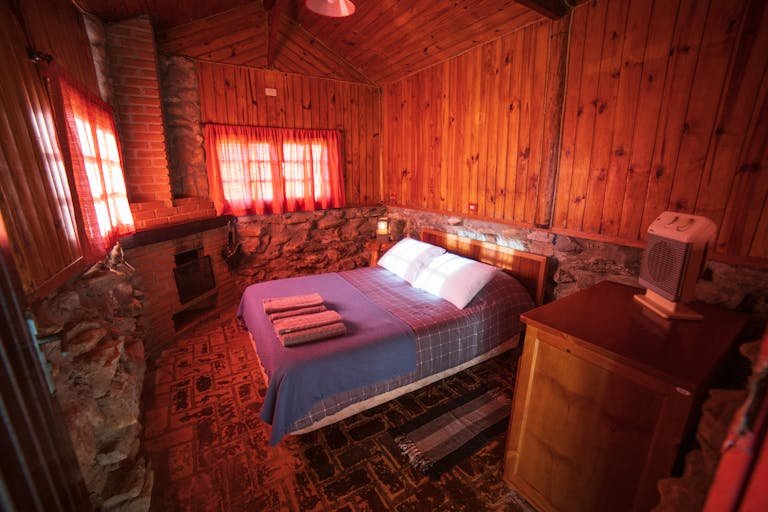
I booked mostly through Booking.com, in private rooms rather than albergues, because I wanted the solitude. I booked only a day or two ahead so I could change how far I walked. A room waiting each night also meant I did not have to rise before dawn to race for an albergue bed. Albergues are the traditional choice for many pilgrims and cost less, so this is a personal preference, not a rule. Our guide to where to stay on the Camino goes into detail.
Your Credential and Stamps
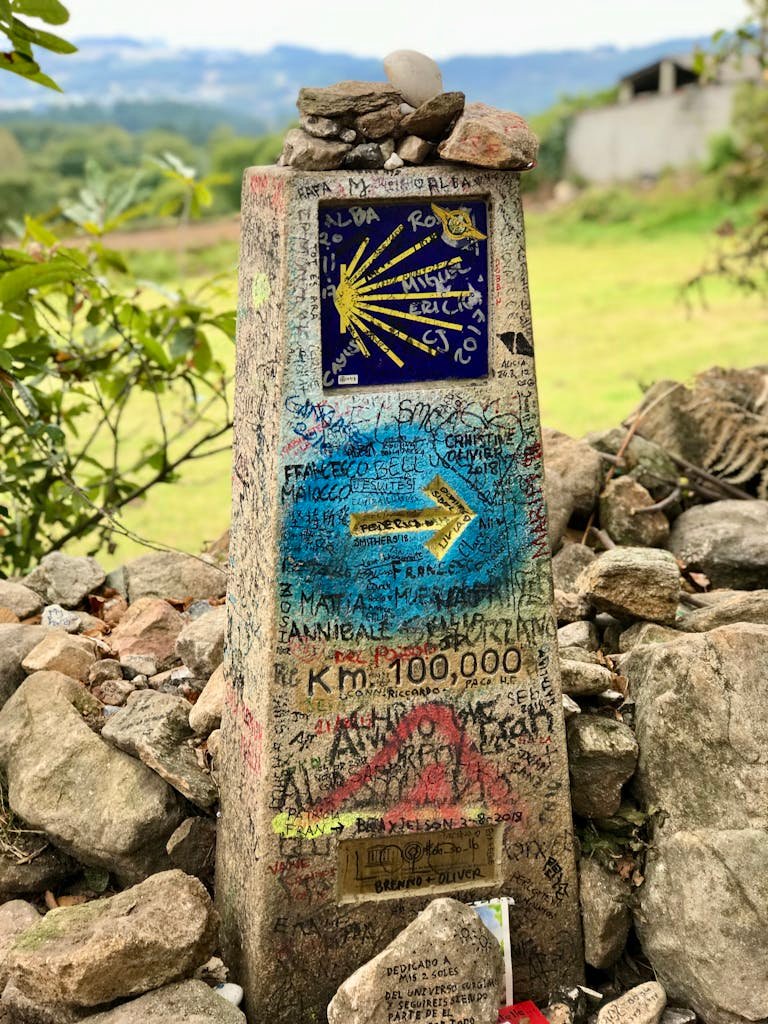
I collected stamps at cathedrals, tourism offices and local businesses. They documented where I was each day, and I preferred stopping at cathedrals for the history and the spiritual side as well as the stamp. Keep your credential somewhere dry and easy to reach. The rules for earning the Compostela changed recently. The old requirement was to walk the last 100 km into Santiago. Now you need to walk 100 km consecutively along any approved Camino route, and your final stage must be walked into Santiago de Compostela. If you started the route on foot outside Spain, the distance you walk in Spain must be at least 70 km. For example, you could start in France, walk about 30 km there, cross into Spain and continue on the same route for another 70 km, which gives you 100 km consecutive and the 70 km in Spain. You could then take a bus, train or plane to the start of the last stage of that same route and walk that stage into Santiago, and that now qualifies. The Pilgrim’s Office reportedly made the change because the last 100 km of each route had become so crowded that lodging was not always available, and the new rule spreads pilgrims across more communities. Cyclists need 200 km under the same conditions.
If you walk only the minimum distance, get your credential stamped at the start and the end of every stage, with the date, so the office can see you resumed the walk where you stopped. You can do the Camino in stages as long as they follow in chronological and geographical order. The printed Compostela may still mention the last 100 km, because the office is still using up pre-printed certificates. Read the current rules on the Pilgrim’s Office website before you plan around them, as they can change again. Our article on Compostela requirements has more.
Arriving in Santiago
Both times, the Pilgrim’s Office was smooth. I pre-registered on the Pilgrim’s Office website and got a QR code before I arrived. At the office I took a queue number, and a representative scanned my QR code, which filled in my details and printed the certificates. The Compostela was free. I also bought the optional Certificate of Distance for €1 and a small paper tube to protect the documents for €1. Prices were correct when I visited and may change.
Health and Safety
Carry a blister kit, drink water regularly, and take sun and heat seriously in warm months. Most towns on the Portuguese route have pharmacies and shops, which is one reason I carried so little in my daypack. For medical or travel-insurance questions, talk to a qualified professional.
Concrete Steps for Your Camino
- Pick one route and read a guide written for it.
- Decide how you will carry your gear. Luggage forwarding made my walks easier.
- Break in your footwear well before you leave.
- Get your credential at your starting point, and pre-register online for the Pilgrim’s Office.
- Book a night or two ahead if you want flexibility.
This article is for informational and educational purposes only. Always verify current travel information, visa requirements, entry rules, and health guidance with official government sources and qualified professionals before making travel decisions.
Partner resource. We may earn a commissionCompare places to stay (Booking.com) →