
Note: This site participates in the Amazon Affiliates and other affiliate partner programs at no cost to you. Visiting an affiliate partner site may result in this site receiving a commission. For more information visit our Affiliate Disclosure page.
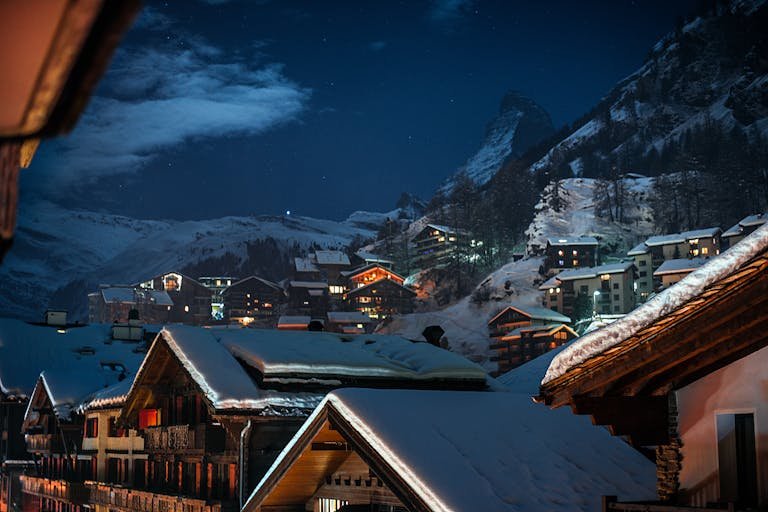
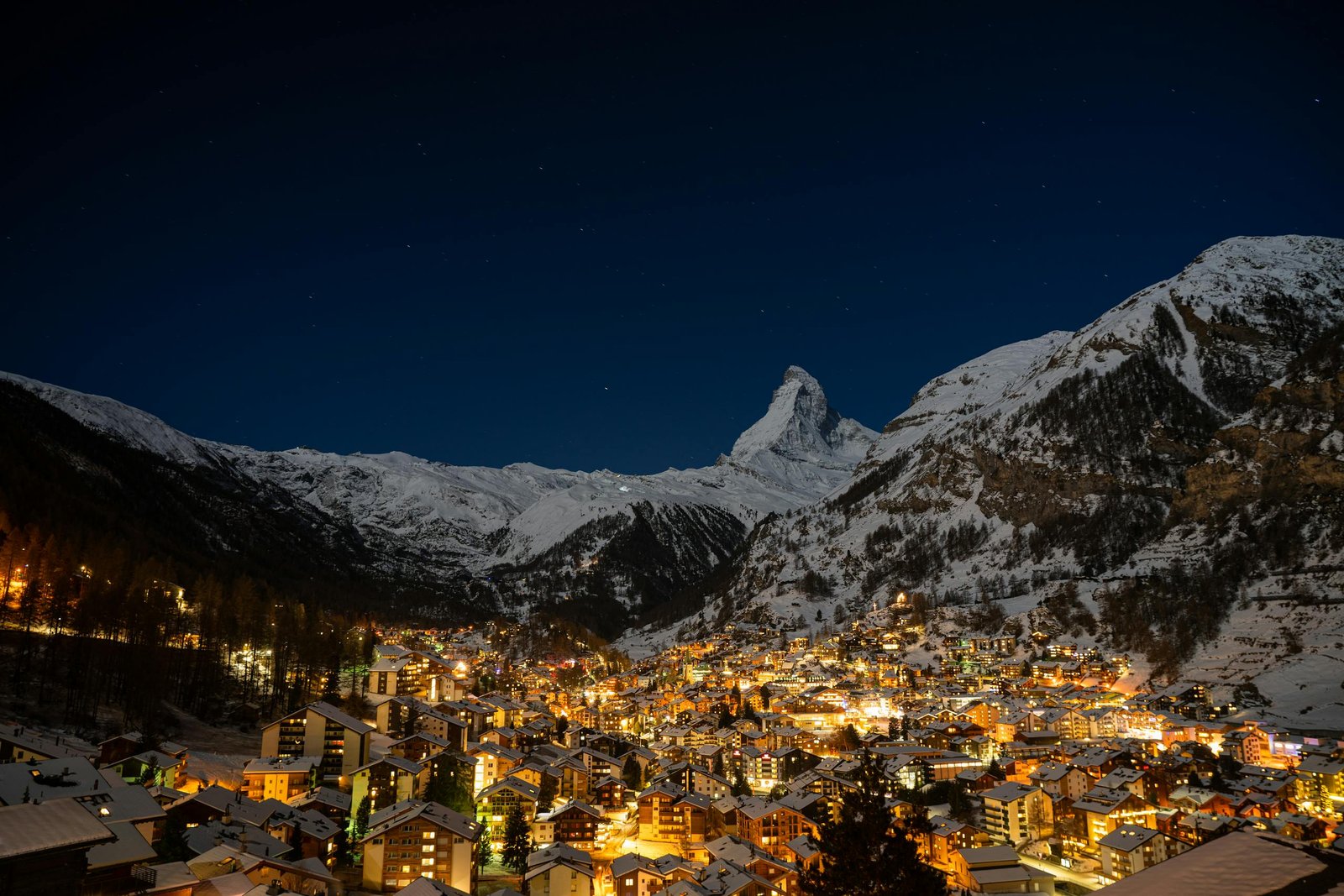
Zermatt sits at the head of the Mattertal valley, under the Matterhorn, and it has been car-free since the 1960s. Combustion-engine cars are not allowed in the village at all. For a first-time visitor that sounds like a problem to solve. In practice it is the opposite: getting to Zermatt and getting around once you are there is simple, and it is all done on trains, small electric vehicles, and your own feet.
This guide covers how to reach the village without a car, how to move around inside it, how to get up onto the mountains, and what is worth your time in and around the centre.
The short answer
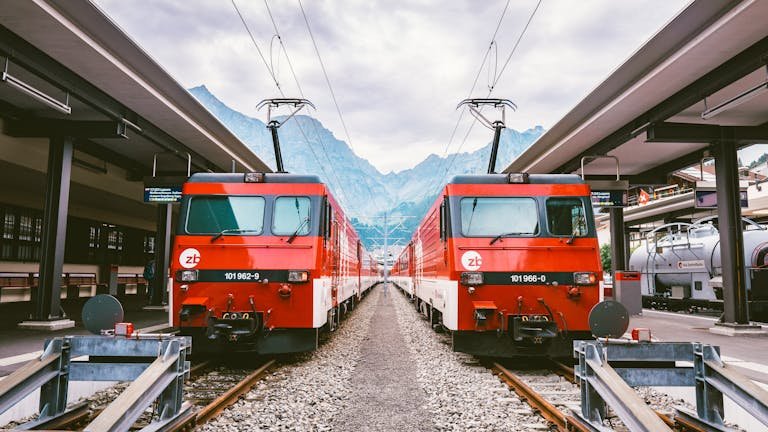
Take the train the whole way. Zermatt has a station in the centre of the village, served by the narrow-gauge Matterhorn Gotthard Bahn. Trains run roughly every 30 minutes up the valley from Visp, which is where you change off the main national network. From Zurich the whole trip is about three hours with that one change. From Geneva it is closer to four.
If you are driving around the rest of Switzerland, you park in Tasch, one stop down the valley, and finish on the shuttle train. You cannot drive any closer.
Getting to Zermatt without a car
By train
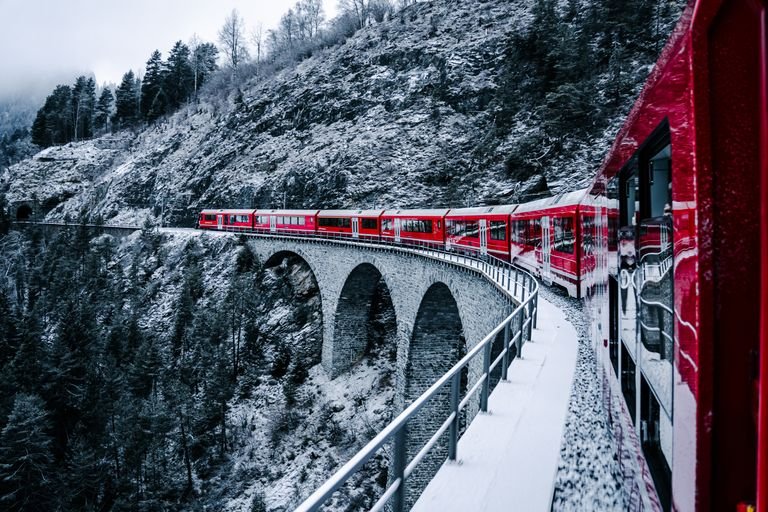
Every arrival into Zermatt is by rail. From Zurich airport or the city, you take an intercity train to Visp (about two hours), then change onto the red Matterhorn Gotthard Bahn train for the last hour up the valley. From Geneva you route through Visp the same way. From the Italian side, you come via Brig. The final climb from Visp is the scenic part, following the river past Sankt Niklaus and Randa with the peaks closing in on both sides.
I came in from Zurich on a Swiss Travel Pass, with the single change at Visp. The pass covered the whole journey and the electric buses in the village, and it knocked half off the mountain railways on top of that. If you are moving around the country anyway, price a pass against your full itinerary before you buy point-to-point tickets. We work through that decision in the Switzerland transport guide.
If you are driving part of your trip
The road ends at Tasch, about five kilometres below Zermatt. Park at the Matterhorn Terminal Tasch, a covered multi-storey car park, and take the shuttle train up. Shuttles leave every 20 minutes and take about 12 minutes. Buy the shuttle ticket from the machines at the terminal. This is the only way to bring a car anywhere near the village.
The Glacier Express
Zermatt is the western end of the Glacier Express, the panoramic train from St. Moritz that takes about eight hours to cross the southern Alps. It is a fine way to arrive if you are already in the east of the country and want the journey to be the event. It is not the quick way in. For that, the standard trains through Visp are faster and run far more often.
Getting around the village
Zermatt is small. It is roughly a 20-minute walk from the station at the north end to the church and the older streets at the south end, and most hotels are within that stretch. For a lot of visitors, walking is the whole answer.
Beyond that, the village runs on electric vehicles:
- Electric taxis. Small battery-powered carts, useful when you have luggage or a long walk to your hotel. There is a rank outside the station.
- Hotel shuttles. Many hotels send their own electric cart to meet guests at the station. Give them your train time when you book and someone will be waiting with a luggage trolley.
- Electric buses. Two lines, green and red, link the station area with the outer parts of the village and the base stations for the lifts. They are free with the Zermatt guest card, which your accommodation issues at check-in.
- E-bikes. Rentable in the village for the valley paths, though the centre itself is quicker on foot.
Getting up onto the mountains
Moving around the village is one thing. Getting up to the viewpoints is a separate question, and a separate cost. Three mountain systems climb out of Zermatt:
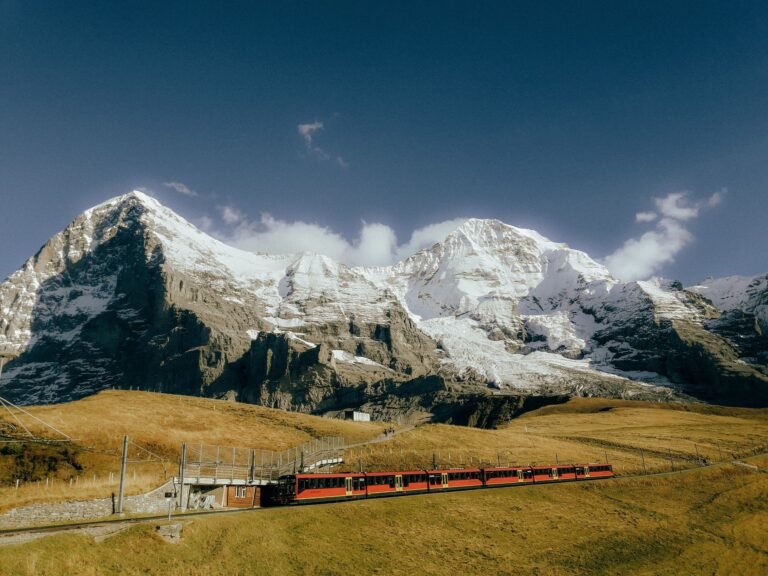
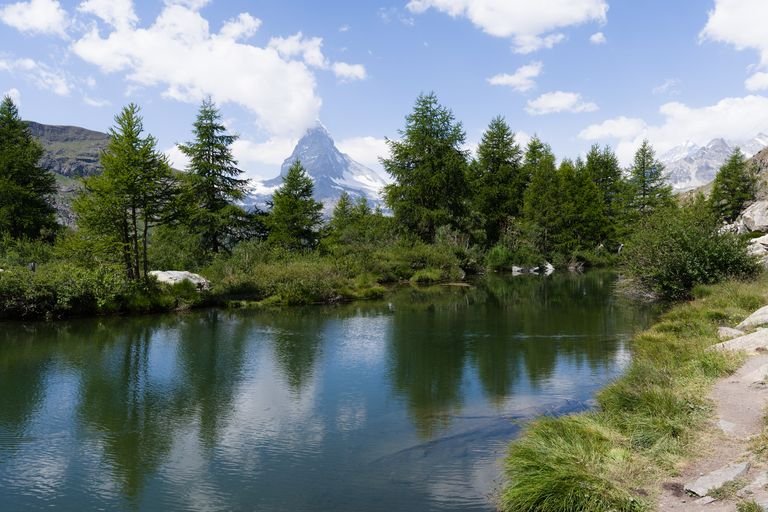
- Gornergrat railway. A cogwheel train from a station opposite the main railway station, climbing to 3,089 metres in about 33 minutes. The view at the top takes in the Gorner Glacier and a wide sweep of 4,000-metre peaks with the Matterhorn to the side. Get off one stop early at Rotenboden for the short walk to the Riffelsee, where the Matterhorn reflects in the water on a still morning. If you ride only one line, make it this one.
- Sunnegga and Rothorn. An underground funicular from the southeast edge of the village up to Sunnegga, then gondolas higher. This side is the start of the Five Lakes Walk, an easy half-day hike past several tarns, including Stellisee and its own Matterhorn reflection.
- Matterhorn Glacier Paradise. A cable car from the south end of the village to 3,883 metres, the highest cable-car station in Europe, with a glacier palace cut into the ice at the top and skiing in summer.
A Swiss Travel Pass or a Half Fare Card gets you roughly half off the Gornergrat railway and the lower cable-car sections. The highest excursions, the top of Matterhorn Glacier Paradise in particular, still cost a substantial fare even with a pass. Budget for one big mountain trip as its own line item; it can cost more than a full day of intercity rail.
Working out the route from the airport? How to Get from Zurich to Zermatt →
What to see in and around the village
Zermatt is mostly a base, but the centre itself is worth a slow half-day:
- The Matterhorn Museum (Zermatlantis). A partly underground museum in the main square about the 1865 first ascent and the accident on the descent that killed four of the party. The broken rope is on display.
- Hinterdorf. The old hamlet in the middle of the village: dark timber barns and granaries raised on stone discs to keep the mice out, some of them 500 years old.
- The Gorner Gorge. A walkway through a narrow rock cleft cut by glacial meltwater, a 20-minute walk from the village and open in the warmer months.
- The church bridge at first light. The Matterhorn catches the sun before the valley does. Stand on the Kirchbrucke early and watch the top of the mountain turn orange while the village is still in shadow.
For a place to stay, the village books out well ahead in both the winter and summer peaks, and prices move quickly. It is worth checking availability for your dates early. Booking.com
Frequently asked questions
Can you drive to Zermatt?
No. The village is closed to combustion-engine cars. The nearest you can drive is Tasch, five kilometres down the valley, where you park at the Matterhorn Terminal and take a shuttle train that runs every 20 minutes and takes about 12.
How do you get from Zurich to Zermatt without a car?
By train in about three hours, with one change at Visp onto the Matterhorn Gotthard Bahn. Trains run roughly every 30 minutes. No advance reservation is needed on these services.
Do you need a Swiss Travel Pass in Zermatt?
It is not required, but it covers the train to Zermatt and the village electric buses, and it takes about half off the Gornergrat railway and the lower cable-car sections. The highest mountain excursions are only partly discounted. Price a pass against your actual planned journeys.
Is Zermatt walkable?
Yes. It is about 20 minutes on foot from end to end, and most hotels sit along that line. Electric taxis, hotel shuttle carts and two electric bus lines cover the rest, mainly useful for luggage or reaching the lift stations.
How do you get around the mountains above Zermatt?
Three systems: the Gornergrat cogwheel railway, the Sunnegga funicular and its gondolas, and the Matterhorn Glacier Paradise cable car. Each is a separate ticket, discounted but not fully covered by a rail pass.
Where to go next
Still sorting out how you will move around the country? Start with Best Transportation Options for Traveling Around Switzerland. Want the airport-to-Zermatt route step by step? See How to Get from Zurich to Zermatt. Thinking about arriving the scenic way? Read Glacier Express: Booking and Experience. Everything we have written on the country sits on the Switzerland hub.
This article is for informational and educational purposes only. Always verify current travel requirements with official government sources before making travel decisions.
Partner resource. We may earn a commissionCompare places to stay (Booking.com) →