
Note: This site participates in the Amazon Affiliates and other affiliate partner programs at no cost to you. Visiting an affiliate partner site may result in this site receiving a commission. For more information visit our Affiliate Disclosure page.
The question of what to pack for Europe comes down to two things: how long you are going, and whether you will do laundry. This is a list for a trip of two weeks or longer, packed into carry-on, on the assumption that you will wash clothes every few days. Almost everything else you might forget can be bought when you arrive.
The short answer
Pack four to five days of clothes, one warm layer, one rain layer, and comfortable shoes you have already worn in. Do laundry every three or four days at a self-service lavanderia or your accommodation. Keep the total to a carry-on and a small day bag. A trip of two weeks and a trip of two months need almost the same packing list.
Carry-on or checked, backpack or wheels
Keep the main bag to carry-on size whatever style you choose. European hotels have stairs, trains have narrow aisles and luggage racks, and cobbled streets are hard on wheels and on you. A large checked case becomes a burden the moment you leave the airport.
- Wheeled carry-on. Easiest on smooth floors and in stations. A two-wheel bag handles rough ground better than a four-wheel spinner and holds slightly more.
- Travel backpack, 30 to 40 litres. Better for trips with a lot of walking, stairs or cobbles, or if you are changing cities often. Look for one with a real hip belt to take the load off your shoulders.
Our carry-on luggage comparison and backpack guide go deeper on specific bags.
Planning a Camino walk specifically? Camino de Santiago Packing List →
Clothing
Quantities below assume laundry every three or four days. Add one or two of each if you plan to wash less often. Choose fabrics that dry overnight.
- Trousers: 2 to 3 pairs. Convertible zip-off legs can save packing a separate pair of shorts.
- Shorts: 1 pair, unless a pair of trousers converts.
- T-shirts: 2 to 3.
- Casual or collared shirts: 2 to 3, for evenings and any restaurant with a dress code.
- Underwear: 3 to 4.
- Socks: 3 to 4 pairs, including one warm pair.
- Warm layer: a light fleece or merino sweater. A packable down or synthetic jacket if you are travelling in shoulder season.
- Rain layer: a light waterproof jacket, or a small folding umbrella, or both in the north and in autumn.
- Shoes: 2 pairs. One comfortable walking pair worn on the plane, one lighter pair for evenings. Both broken in before you leave.
- Sandals or flip-flops: 1 pair, also useful as shower shoes in shared bathrooms.
- Swimwear: 1, if the trip touches the coast, a lake or a spa town.
- Hat and gloves: as the forecast dictates. Wear the bulky items on the plane rather than packing them.
Electronics
- Phone and charger.
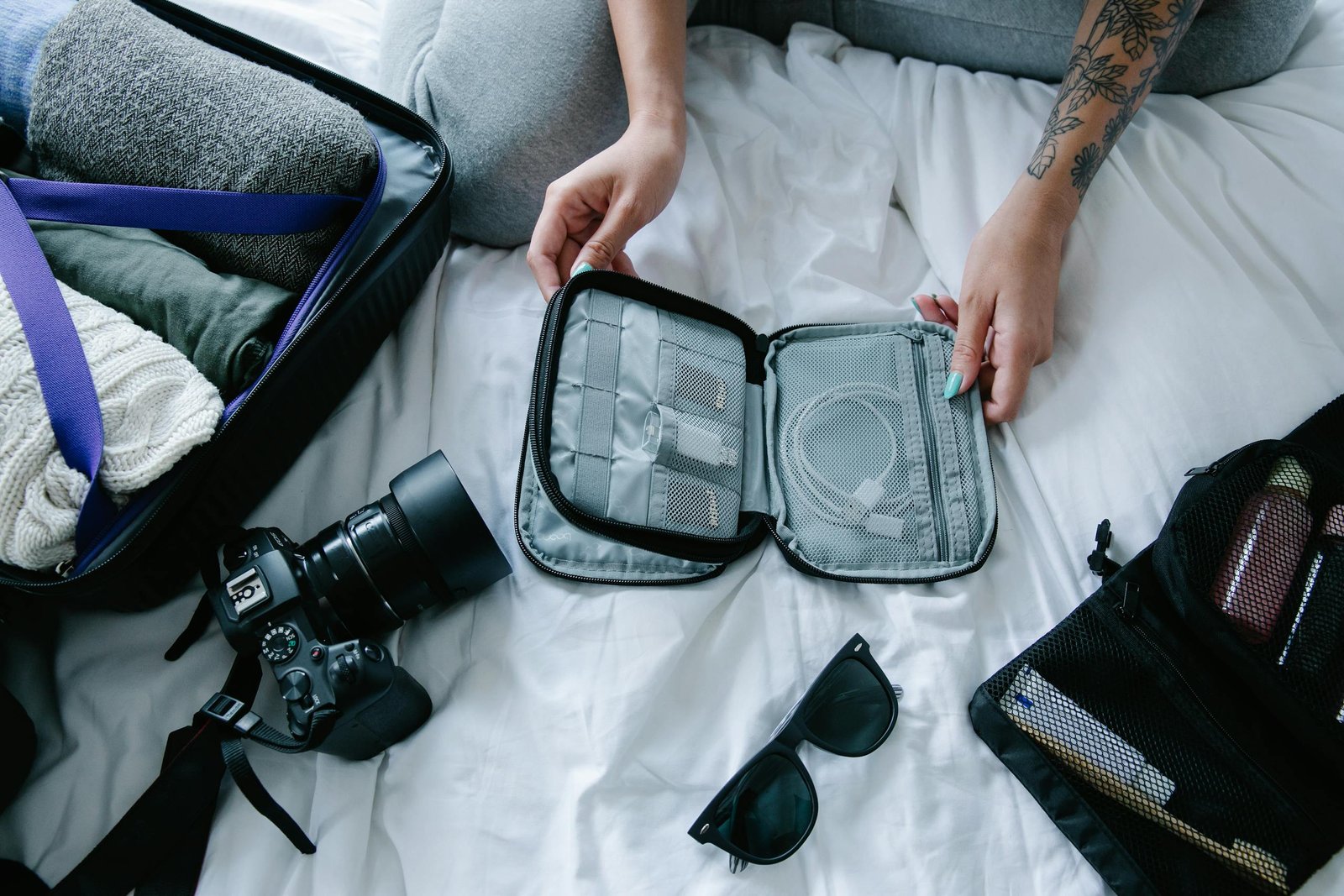
- A Type C or Type F plug adapter for continental Europe, which runs on 230 V. The UK and Ireland use Type G, so pack both if your trip includes them. A small multi-port USB charger saves carrying several bricks.
- Power bank for long sightseeing days. Keep it in your carry-on, never checked.
- Tablet, e-reader or laptop only if you will genuinely use it.
- Headphones.
- Camera, if your phone will not do. For most travellers it will.
Toiletries and medicine
- Toothbrush, toothpaste, deodorant, a small soap or shampoo. Most accommodation supplies the basics.
- Any prescription medication in its original packaging, in your carry-on, with enough for the whole trip plus a few spare days.
- A small first-aid kit: plasters, blister patches, painkillers, any personal essentials.
- Contact lenses, case and solution if you wear them.
- A few flat laundry-soap sheets for self-service machines or a sink wash.
- Sunscreen. Easy to buy locally, so do not overpack it.
The day bag
Carry a small bag for daily use so the main bag can stay at the accommodation. Keep your passport, cards, phone, a water bottle and a rain layer in it. A crossbody sling or a packable daypack both work; see our sling bag guide for the trade-off.
What I actually carry
My main bag holds two changes of everything, toiletries, chargers and spare batteries, a light silk sleep sheet, an inflatable pillow, flip-flops and swimwear. In the small day bag: a folding umbrella, water bottle, passport, a small camera, phone, wallet and a blister kit. That has covered trips of three weeks and more without a checked bag. When something runs out, the shops in any European town have it.
Frequently asked questions
How many clothes should I pack for two weeks in Europe?
Four to five days of outfits, then do laundry. Two or three trousers, two or three t-shirts, two or three shirts, three or four sets of underwear and socks. The same list works for a much longer trip.
Can I really do Europe with only a carry-on?
Yes, for any length of trip, as long as you are willing to wash clothes every few days. Self-service laundries are common in European towns and cities, and most accommodation can point you to the nearest one.
What power adapter do I need for Europe?
Continental Europe uses Type C and Type F plugs at 230 V. The UK and Ireland use Type G. Modern phone and laptop chargers handle the voltage automatically, so you only need the plug adapter, not a converter.
Should I pack a rain jacket or an umbrella?
A light waterproof jacket is more versatile and frees your hands. Add a small folding umbrella for autumn trips and for the north and west of Europe, where rain is more frequent.
Where to go next
For a route-specific list, see the Camino de Santiago packing list. For choosing the bag itself, read the carry-on comparison or the backpack guide. Everything we have written on the region sits on the Europe hub.
This article is for informational and educational purposes only. Always verify current travel requirements with official government sources before making travel decisions.
Partner resource. We may earn a commissionCompare places to stay in Europe (Booking.com) →