Note: This site participates in the Amazon Affiliates and other affiliate partner programs at no cost to you. Visiting an affiliate partner site may result in this site receiving a commission. For more information visit our Affiliate Disclosure page.
Picture this: You’re standing on the marble steps of the Parthenon at sunset, the last rays of light casting golden hues over the ancient columns. A tourist guide’s voice booms from a headset nearby, but you’re alone in your awe. Athens is a city where the past doesn’t just linger—it *breathes*. Yet, navigating its labyrinth of history can feel as daunting as deciphering a 2,500-year-old inscription. Fear not: with a 30€ combo ticket in hand and a few local tips, you’ll move through these sites like a seasoned archaeologist, not a lost tourist.
Plan Your Visit: The Combo Ticket That Saves Time and Money
If you’re visiting Athens for more than a day, the 30€ combo ticket is your golden key. It grants access to the Acropolis (including the Parthenon, Erechtheion, and Odeon of Herodes Atticus) plus six other sites: Ancient Agora, Roman Agora, Hadrian’s Library, Lykeion, Kerameikos, and the Olympieion. This ticket isn’t just a wallet saver—it’s a time machine, letting you leap between eras without the hassle of separate queues. Reddit users r/travel swear by it, noting that museums like Kerameikos and Hadrian’s Library are included, which are often overlooked by those fixated on the Acropolis.
Start your day early, when the heat is manageable and the crowds are fewer. The combo ticket is valid for two days, so prioritize the sites that align with your interests. For example, if you’re drawn to theater, the Theatre of Dionysus (on the Acropolis slopes) and the Odeon of Herodes Atticus are must-sees. History buffs might linger at the Lykeion, where Aristotle taught, or the Roman Agora, where Hadrian’s Aqueduct still stands as a testament to engineering prowess. The ticket’s flexibility ensures you don’t miss anything—and that’s a rare luxury in a city where history is layered like an archaeological onion.
Pro tip: The combo ticket is reusable, but only for the first entry to each site. If you want to revisit the Acropolis later, you’ll need to buy a separate ticket. Still, for most travelers, the combo’s price point is unbeatable. And with museums like the Ancient Agora’s on-site museum included, you’ll gain context that transforms stone ruins into vivid narratives.
With your ticket secured, it’s time to ascend the Acropolis—a journey that begins not on the hill itself, but in the museum below.
Acropolis: From Museum to Marble Monuments
The Acropolis Museum is your prelude to the summit. Local guide Kyriakos recommends starting on the 3rd floor, where a video encapsulates the Parthenon’s history in just 10 minutes. This isn’t just a primer—it’s a masterclass. As you descend to the ground floor, you’ll trace the evolution of Athenian architecture, from the Archaic to the Classical periods. The museum’s glass floors, which reveal excavated ruins beneath, are a subtle reminder that every step you take on the Acropolis is a step through time.
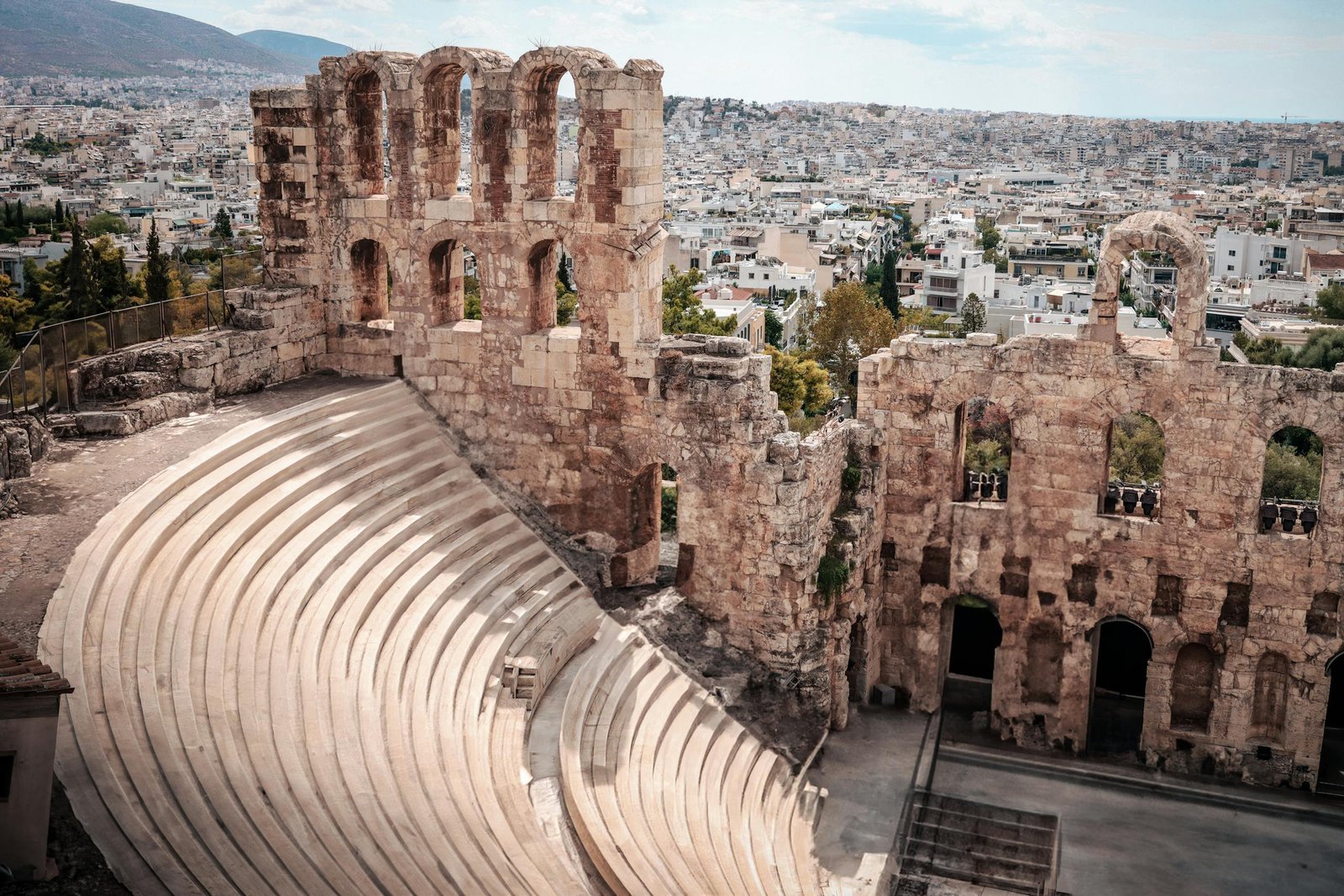
Once you’ve acclimated to the museum’s scale, head to the Acropolis itself. The climb is short but steep, and the reward is immediate: the Parthenon’s silhouette dominates the skyline. Here, the combo ticket comes into play again. The Erechtheion, with its iconic Caryatids, and the Temple of Athena Nike are all within reach. Don’t skip the Odeon of Herodes Atticus, a marble amphitheater still used for summer performances. From this vantage point, you’ll see why the Greeks believed the gods resided in these very stones.
But the Acropolis isn’t just about monuments—it’s about perspective. The Theatre of Dionysus, the birthplace of Greek tragedy, is tucked into the southern slope. Imagine Sophocles’ audiences here, their faces illuminated by torchlight. The combo ticket ensures you can linger, but be mindful of the 3 PM closure time. As the sun dips, the Parthenon’s façade turns molten gold, a moment that transcends the need for words—or selfies.
With the Acropolis under your belt, it’s time to explore the city’s underbelly: the Agora and its Roman counterpart.
Agora & Roman Ruins: The Heartbeat of Democracy and Empire
Just a short walk from the Acropolis lies the Ancient Agora, the cradle of democracy. This was where Socrates debated and where the first democratic assemblies convened. The Stoa of Attalos, a reconstructed building housing the Agora Museum, is a treasure trove of artifacts, including coins, pottery, and statues. The museum’s interactive displays bring the agora’s daily life to life, from market transactions to legal proceedings. Here, you’re not just a tourist—you’re a citizen of 5th-century BCE Athens.
Continue westward to the Roman Agora, a stark contrast to its Classical predecessor. Built by Hadrian, this complex includes the Tower of the Winds, a weather-vane clock tower that’s both a functional and symbolic relic of Roman engineering. The nearby Hadrian’s Library, though mostly in ruins, was a center of learning and culture in the 2nd century CE. The library’s courtyard, now a peaceful green space, is a hidden gem where you can sit and reflect on Athens’ layered history.
The combo ticket’s inclusion of the Lykeion (Aristotle’s school) and the Olympieion (a massive temple to Olympian Zeus) rounds out this section of the city. The Lykeion, with its shaded colonnades, is a tranquil spot for a post-visit coffee. The Olympieion, though unfinished, boasts colossal columns that dwarf the surrounding buildings. These sites collectively illustrate Athens’ evolution from a Classical polis to a Roman metropolis, a transition that’s rarely so tangible.
As the day winds down, consider a detour to Kerameikos, where the past and present collide in the most hauntingly beautiful way.
Kerameikos & Beyond: Cemeteries, Colonies, and the City’s Soul
Kerameikos is Athens’ most poignant historical site. This ancient cemetery, once a bustling thoroughfare, is where hoplites were honored and where the city’s elite laid their dead to rest. The site’s necropolis is flanked by the Dipylon Gate, a fortified entrance that guarded the city. Walking here feels like stepping into a silent, sacred ritual. The combo ticket grants access to the Kerameikos Museum, where funerary steles and pottery reveal the Greeks’ complex relationship with death.
North of Kerameikos lies the Archaeological Site of Lykeion, where Aristotle’s Lyceum once stood. Unlike the grandeur of the Acropolis, this site is modest, with a simple colonnade and a library. Yet it’s here that Aristotle’s students gathered, shaping Western thought. The site’s quietness is deceptive; it’s a reminder that ideas, not just monuments, define a civilization.
The combo ticket’s final stop is the Olympieion, a temple that took 170 years to complete. Its 17 surviving columns—each 18 meters tall—are a testament to Roman ambition. Though unfinished, the temple’s scale is staggering. It’s a fitting end to a day spent navigating Athens’ history, from the cradle of democracy to the zenith of imperial power.
By now, you’ve walked through Athens’ bones and sinews. But the city’s soul is best felt in its streets, not just its sites.
Local Secrets: Beyond the Combo Ticket
Athens isn’t just about ancient ruins. The National Archaeological Museum, though not included in the combo ticket, is a must-visit. Its 11 halls house artifacts from every era of Greek history, from Minoan frescoes to Byzantine icons. The museum’s layout is intuitive, and the staff often offer insights that rival any guidebook. If time permits, the museum’s rooftop garden offers a quieter view of the Acropolis than any tourist hot spot.
For a taste of Athenian life, head to Plaka, the city’s oldest neighborhood. Its narrow streets are a mosaic of neoclassical houses, artisan shops, and tavernas. Though it’s a tourist hub, Plaka’s charm lies in its spontaneity. Try a *gigantes plakates* (stuffed eggplant) at a family-run eatery, or sip ouzo at a corner café. The area’s proximity to the Acropolis and Agora makes it a convenient base for history-hungry travelers.
If you’re staying for a second day, consider the Acropolis at night. The site is open until 10 PM, and the Parthenon’s floodlights transform it into a celestial monument. The crowd thins, and the atmosphere becomes almost reverent. It’s a different kind of magic—one that requires no combo ticket, just a willingness to see Athens in a new light.
With these local insights, you’ve mastered the art of navigating Athens’ history on your own. But before we wrap up, let’s address a few common questions.
Frequently Asked Questions
What’s the best time of day to visit the Acropolis? Early mornings (8–10 AM) are ideal. The light is soft, the crowds are sparse, and the heat is bearable. Avoid afternoons in summer; the stone steps can become scorching.
Can I use the combo ticket for multiple entries? No. The combo ticket is valid for one entry to each site. If you want to return to the Acropolis, you’ll need a separate ticket. However, museums included in the combo (like the Ancient Agora’s) can be revisited with the ticket.
Are there guided tours for the combo sites? Yes, but they’re optional. Many travelers find the combo ticket sufficient, especially when paired with the Acropolis Museum’s video tour. For a deeper dive, consider a 2-hour guided walk through the Agora or a 3-hour combo tour with a historian.
How long does it take to explore all combo sites?
Two full days are recommended. The Acropolis alone can take 3–4 hours, while the Agora and Roman sites require 1.5–2 hours. Factor in breaks and downtime, especially in summer.
This article is for informational and educational purposes only. Always verify current travel information, visa requirements, entry rules, and health guidance with official government sources and qualified professionals before making travel decisions.