
Note: This site participates in the Amazon Affiliates and other affiliate partner programs at no cost to you. Visiting an affiliate partner site may result in this site receiving a commission. For more information visit our Affiliate Disclosure page.
The credencial del peregrino, the pilgrim credential, is a folded card you carry on the Camino de Santiago and get stamped along the way. It does two jobs at once: it is the practical record that lets you claim your Compostela at the end, and it is a keepsake you will still have decades later. Here is how it works, and how to get the most out of it.
The short answer
Get a credential before you start, from a Camino association, a confraternity, or the cathedral or main albergue at your starting point. Get it stamped at least once a day. If you walk only the minimum distance for the Compostela, get a dated stamp at the start and the end of every stage. Stamps come from albergues, churches, cafés, town halls and tourist offices. Hand the credential in at the Pilgrim’s Office in Santiago to receive your Compostela, then keep the credential itself.
Getting a credential
You need it before you set off. Sources:
- National Camino associations, American Pilgrims on the Camino in the US, the Confraternity of Saint James in the UK, and equivalents elsewhere. They post one to you for a small fee.
- The cathedral or main pilgrim albergue at your starting town, Saint-Jean-Pied-de-Port, Sarria, Porto, Lisbon, Tui. Usually a donation of €1-3.
- Some parish churches along the route.
One credential holds roughly 40-60 stamps. Long routes need a second, which you pick up at an albergue or cathedral along the way.
How the stamps (sellos) work
Each stamp records where you were and the date. Who stamps: albergues at check-in, churches and cathedrals, tourist offices, town halls (ayuntamiento), and many cafés, bars and shops.
For most of the route, one stamp a day is a sensible habit. The Compostela rules changed recently. The old requirement was the last 100 km into Santiago. Now you need at least 100 continuous km on one recognised route, the final stage into Santiago must be walked, and if you walk only the minimum distance you must get a dated stamp at the start and the end of each stage, so the office can see you resumed the walk where you stopped. Check the current wording on the Pilgrim’s Office website before you go. Towns such as Sarria on the Camino Francés and Tui on the Portuguese route remain popular places to start.
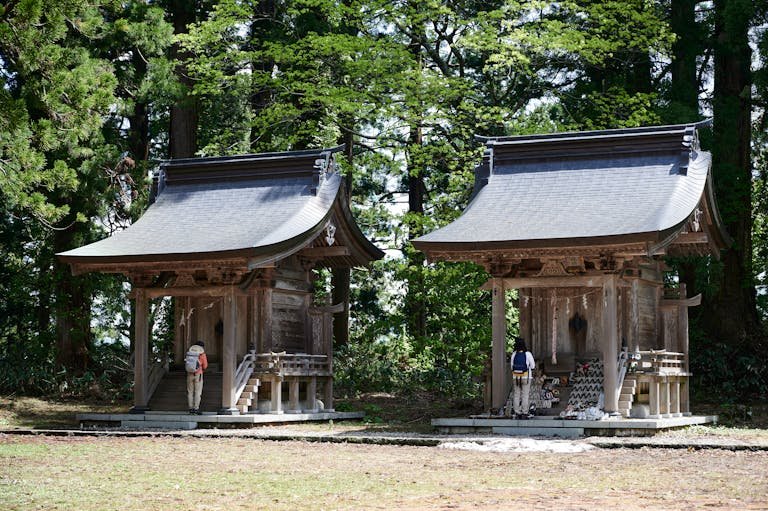
Curious about Japan’s version of this tradition? Goshuin Stamps in Japan →
What I collected, and where
On both my Caminos I collected stamps at cathedrals, tourist offices and local businesses, and I made a point of stopping at the cathedrals, for the history and the quiet as much as the stamp. It slows the walking day down in a good way. The finished book, with a stamp from every place I stopped, turned out to be the thing I go back to, more than the certificate itself.
The credential as a record, and a keepsake
Beyond qualifying for the Compostela, the collected credential is a visual diary of the route. Every town’s stamp is different, a cathedral seal, a bar’s rubber stamp, a hand-drawn one from a small donativo albergue. Many pilgrims frame the finished card. It is the object that brings the walk back years later, in a way a framed certificate on the wall does not.
Discounts and the pilgrim network
The credential also gets you pilgrim rates at albergues and some restaurants, and it is what grants access to the parish and donativo albergues that only take credentialed pilgrims. Carry it somewhere dry and accessible, a zip-lock bag in a hip-belt pocket works.
Digital credentials
Some associations now issue printable credentials. The paper card is still the standard, and it is what most albergues and the Pilgrim’s Office expect to see, so unless you have a specific reason otherwise, get the physical one.
At the end: the Compostela
In Santiago, you hand the credential in at the Pilgrim’s Office. Staff check your credential and stamps and issue the Compostela (free) and, if you want it, a Certificate of Distance (a small fee). The full eligibility rules are covered in our Compostela requirements guide.
Both times, I filled in the Pilgrim’s Office online form beforehand and arrived with a QR code. At the office you take a queue number; the clerk scans the QR and your details print straight onto the certificate. The Compostela was free; the distance certificate was €1, and a cardboard tube to protect them on the flight home was another €1. Prices can change, but the online pre-registration is what made both visits quick.
Frequently asked questions
Where do I get a credential for the Camino?
Before you start: a national Camino association or confraternity, or the cathedral or main albergue at your starting town. Usually a small donation of €1-3.
How many stamps do I need per day?
One a day is a good habit. If you walk only the minimum distance for the Compostela, you need a dated stamp at the start and at the end of every stage. The rules were updated recently, so confirm the current wording with the Pilgrim’s Office.
Where can I get my credential stamped?
Albergues, churches and cathedrals, tourist offices, town halls, and many cafés, bars and shops along the way.
What happens to my credential after Santiago?
You keep it. You hand it over briefly at the Pilgrim’s Office so they can verify your stamps, then it is returned. The Compostela is a separate document.
Can I start a second credential mid-route?
Yes. Longer routes need two; pick up the second at an albergue or cathedral along the way.
Where to go next
For who qualifies and how the certificate works, read the Compostela requirements. For Japan’s parallel tradition, see Goshuin stamps in Japan. Everything we have written on the route sits on the Camino de Santiago hub.
This article is for informational and educational purposes only. Always verify current travel requirements with official government sources before making travel decisions.
Partner resource. We may earn a commissionCompare albergues & hotels on the Camino (Booking.com) →