
Note: This site participates in the Amazon Affiliates and other affiliate partner programs at no cost to you. Visiting an affiliate partner site may result in this site receiving a commission. For more information visit our Affiliate Disclosure page.
A goshuin is not a tourist stamp. It is a page of hand-brushed calligraphy and a vermilion seal that a temple or shrine gives you as proof that you worshipped there. People collect them in a dedicated book, and for many travellers a filled goshuincho becomes the most personal record of a trip through Japan. This guide covers what they are, how to receive one properly, and the etiquette that separates a respectful collector from a nuisance at the counter.
What a goshuin actually is
The word goshuin (御朱印) means “honorable vermilion seal.” Go is an honorific, shu is vermilion, in is a seal. You will sometimes see it rendered as “red seal stamp.” What you should not call it is a “sacred ink seal,” a translation that gets copied around the internet and is simply wrong.
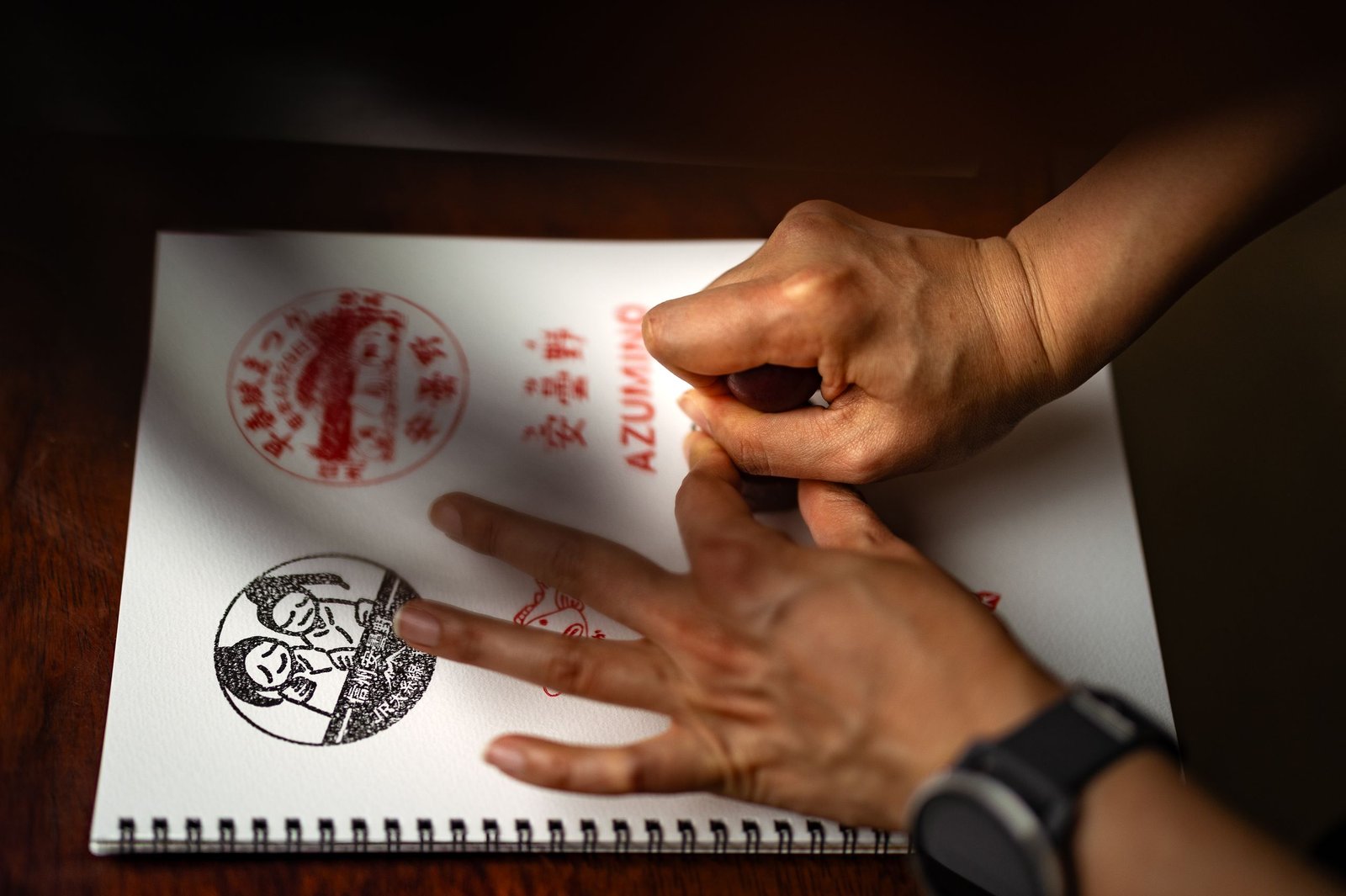
Each goshuin is made by hand while you wait, or prepared in advance at busy sites. A typical one carries the date of your visit, the name of the temple or shrine, the name of the enshrined deity or principal Buddha, and one or more red seal impressions brushed over with black ink. No two are identical, because a person writes every one.
The key thing to understand is that a goshuin is a religious article. It is issued as a record of worship, not sold as a souvenir. Treat it, and the book it lives in, accordingly.
Curious how the Camino’s stamp culture compares? Camino de Santiago Stamp Culture →
The goshuincho: the book you collect them in
A goshuincho (御朱印帳) is an accordion-fold book of thick washi paper, made so the ink does not bleed through. You can buy one at most large temples and shrines, at temple gift counters, and at stationery shops, usually for 1,500 to 3,000 yen. Many people choose their first book at a site that matters to them, since the cover often carries that temple’s design.
A few practical points about the book:
- Most temples and shrines will only write in a proper goshuincho, not on a loose sheet of paper or in an ordinary notebook.
- If the office is busy, or the calligrapher is not present, you may be offered a kakioki: a sheet inscribed in advance that you paste into your book later. This is normal and it counts.
- One book can usually hold both Buddhist temple and Shinto shrine goshuin. A small number of temples, mainly certain Nichiren sub-sects, will not write in a book that also contains other traditions’ seals. If your itinerary includes those, carry a second book.
How to receive one, step by step
- Worship first. Make your offering at the main hall, and bow or pray in the way appropriate to a shrine or a temple. The goshuin follows the visit; it does not replace it.
- Find the goshuin desk. Look for the characters 御朱印, or signs reading 朱印所 or 納経所, usually near the entrance or beside the amulet counter. Hours are typically around 9:00 to 16:00 or 17:00, shorter in winter.
- Hand over your book open to the next blank page, and indicate which design you would like if there is a choice.
- Pay the fee. A standard goshuin is 300 to 500 yen; seasonal or limited designs run 500 to 1,000. Bring small coins and notes, because it is almost always cash only. The counter may be labelled 初穂料 at a shrine or 納経料 at a temple; both mean you are making an offering rather than buying a product.
- Wait quietly. At a calm temple the priest brushes the page in front of you in a couple of minutes. At a major site during a holiday you may take a number and collect a pre-written sheet.
A short do and don’t list
Do: worship before you ask; carry small change; bring a real goshuincho; hand the book over open to the right page; accept a pre-written slip graciously when it is offered.
Don’t: ask during a funeral or a ceremony; ask the staff to hurry or to skip a queue; treat it as a collect-them-all challenge; photograph the calligrapher at work without asking; expect a temple to write in a stamp-rally book or a diary; question the fee.
Goshuin on the Kumano Kodo
If you are walking the Kumano Kodo, the goshuin tradition connects directly to the route. The three Kumano Grand Shrines, Hongu Taisha, Nachi Taisha and Hayatama Taisha, each issue their own seal, and Seiganto-ji beside Nachi Falls issues one as a temple. Together they form a natural set for anyone completing the Nakahechi.
This is also where the Japanese and European pilgrimage traditions line up. The Kumano shrine seals play the same role as the credential stamps collected along the Camino de Santiago: a physical record that you walked the path and stood at its sacred places. For the route itself, see the Kumano Kodo hub, and for the two pilgrimages side by side, Kumano Kodo vs Camino de Santiago.
I collected stamps all along my own Kumano Kodo walk. At the shrines that meant a goshuin; along the trail there are also stamp posts, and most of them you can only reach on foot by actually walking the path. Together they documented where I had been each day, and looking back through them is one of the better ways I have found to hold on to what the walk felt like.
Frequently asked questions
Is it disrespectful to collect goshuin if I am not religious?
No, as long as you treat each one as the record of a visit to a sacred place and not a trophy. Worship first, keep quiet at the counter, and do not rush the person writing. Plenty of Japanese collectors are not devout either.
Can I get a goshuin at any temple or shrine?
At most larger, staffed ones, yes. Small unattended shrines usually have none. A few temples decline the practice entirely, or will only inscribe a book that does not mix traditions.
How much should I budget?
Around 300 to 500 yen per goshuin, in cash, plus 1,500 to 3,000 yen once for the book. Limited seasonal designs cost more.
Can one book hold both temple and shrine stamps?
Usually yes. The exception is a minority of Buddhist temples that will not write alongside Shinto seals. Carry a second book if your route includes them.
What if the goshuin office is closed or overwhelmed?
Many places sell a kakioki, a sheet inscribed in advance, which you paste into your book afterwards. It is a normal part of the practice, not a lesser version.
Where to go next
For the pilgrimage this tradition sits closest to, start with Kumano Kodo vs Camino de Santiago and Walking the Camino de Santiago and the Kumano Kodo. For the European side of stamp culture, see Camino de Santiago Stamp Culture. Everything we have written on the region sits on the Asia hub.
This article is for informational and educational purposes only. Always verify current travel requirements with official government sources before making travel decisions.
Partner resource. We may earn a commissionBook temple & culture tours in Japan (Viator) →