
Note: This site participates in the Amazon Affiliates and other affiliate partner programs at no cost to you. Visiting an affiliate partner site may result in this site receiving a commission. For more information visit our Affiliate Disclosure page.
Across a lot of years travelling through Spain, Portugal, Switzerland, Japan and half a dozen other countries, I have never once rented a car. Trains, buses and the occasional ferry have reached almost everywhere I wanted to go. That is the honest starting point: for most classic trips you do not need a rental, and it is worth checking the public transport option first.
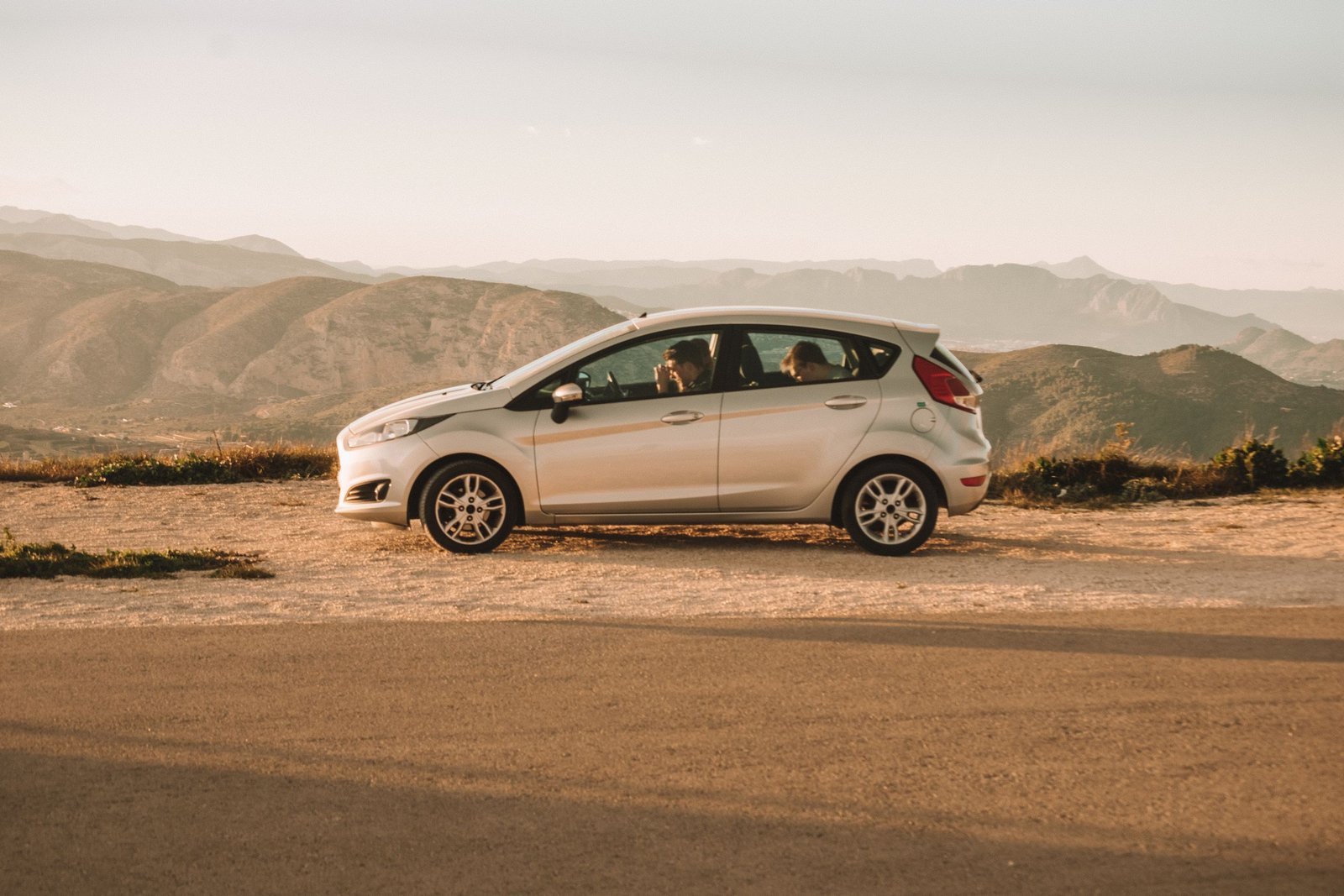
But a car is still the right call for some trips: a rural base, a stretch of coast with no railway, a national park, a countryside loop with several stops a day. When that is the trip you are planning, these are the five things that actually catch people out when they rent abroad.
1. Your licence and the International Driving Permit
An International Driving Permit (IDP) is a standardised translation of your home licence. It is not a licence on its own; you carry it alongside your normal one. You must get it in your home country before you leave, usually from the national automobile association, for a small fee, with your licence and a passport photo. You cannot obtain one once you are abroad.
Whether you need it depends on the country and on which licence you hold:
- Spain, Portugal and Italy officially require an IDP for drivers with a non-EU licence. Rental desks often do not check, but police at a roadside stop do, and an insurer can use a missing IDP to deny a claim.
- Switzerland accepts a valid national licence printed in the Latin alphabet for up to 12 months, so most visitors do not need an IDP there. Carrying one does no harm.
AutoEurope specialises in car hire across Europe and negotiates rates with Hertz, Europcar and Sixt that often beat booking direct. Free cancellation up to 48 hours before pickup is standard on most bookings. AutoEurope
Heading somewhere the trains cover just as well? Getting Around Spain by Train, Bus & Taxi →
2. Insurance: what you already have, and what they will sell you
In the European Union, basic collision and theft cover is included in the rental rate by law, but with a large excess, often more than a thousand euros, that you are liable for if anything happens. The desk will offer to reduce or remove that excess for a daily fee, and that upsell is where rental companies make their margin.
Before you accept it, check two things. First, whether your credit card includes rental collision cover; many do, but often as secondary cover, and several exclude specific countries or vehicle classes. Second, whether a standalone excess reimbursement policy bought in advance would be cheaper, which it usually is by a wide margin. Also read what the included cover leaves out: tyres, glass, the underbody and the roof are commonly excluded, and those are exactly what a kerb or a gravel road damages.
3. The country quirks that catch people out
Switzerland: every car on a motorway needs a vignette, a sticker or its electronic equivalent, valid for the calendar year and costing around CHF 40. Rental cars registered in Switzerland already have one. Alpine passes close from roughly October to May, which can add hours to a route that looks direct on a map. Several resort towns, Zermatt, Wengen, Murren and Saas-Fee among them, are car-free; you park in a valley garage and take a train or cable car up. Town parking is scarce and expensive.
Spain: low-emission zones (Zonas de Bajas Emisiones) now operate in Madrid, Barcelona and a growing list of other cities. Access is camera-enforced, and a rental car needs the right environmental label to enter. Old-town centres in Andalusian and other historic towns often have camera-controlled restricted zones too. The blood alcohol limit is low, and lower still for drivers licensed under two years.
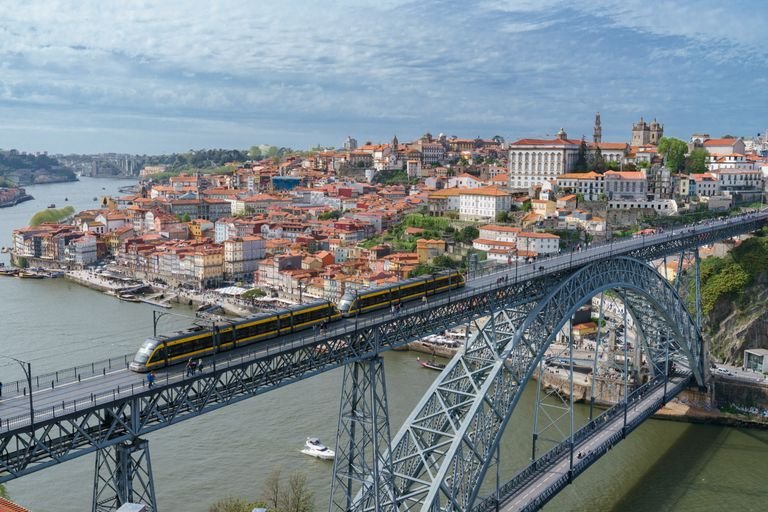
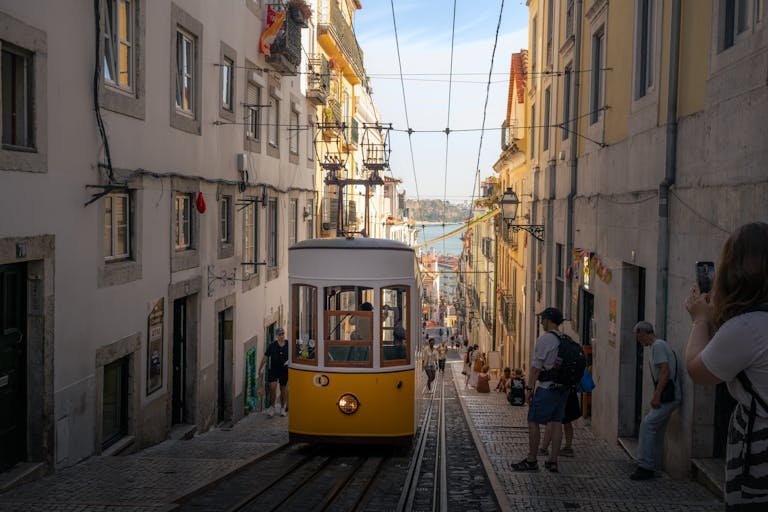
Portugal: most motorway tolls are conventional, with a ticket and a payment booth, and the A22 along the Algarve became toll-free in 2025. The trap is the electronic-only sections, where there is no booth and a camera reads your plate. In a rental you cannot always arrange your own toll account, so confirm the toll method with the rental company at pickup. If the plate is not registered to a payment method, the bill goes to the rental company, which charges it back to you weeks later with an administration fee. Lisbon and Porto historic centres are hard to drive and harder to park.
4. Booking mechanics and the fine print
The headline rate is rarely the final number. Watch for one-way drop fees if you return the car to a different city, young or senior driver surcharges, airport pickup surcharges, additional driver fees, and mileage caps on some cheaper rates. The fuel policy matters: full-to-full, where you return it as you got it, is the only one that does not overcharge you. Cross-border rules matter too; taking the car into another country is usually fine within the EU but you should tell the company, and some restrict which countries are allowed.
In Spain and Portugal, book well ahead for July and August. Coastal rental fleets sell out and prices climb steeply close to the date.
5. At pickup and on the road
Photograph every panel of the car, the wheels and the fuel gauge before you drive off, and make sure any existing damage is written on the sheet, not just waved at. Know what you are driving: manual transmission is the default in Europe and automatics cost more and are in shorter supply, many cars are diesel, and some need AdBlue topped up on a long trip. The emergency number across the European Union is 112.
Frequently asked questions
Do I need an International Driving Permit to rent a car in Europe?
For Spain, Portugal and Italy, yes, if your licence is non-EU. Switzerland does not require one for a Latin-alphabet national licence. Get the IDP in your home country before you travel; you cannot get one abroad.
Is the rental company’s insurance worth buying?
EU law already includes basic collision and theft cover, but with a high excess you are liable for. Rather than pay the desk’s daily fee to reduce it, check your credit card cover and price a standalone excess policy bought in advance, which is normally much cheaper.
Can I drive a rental car between countries?
Usually yes within the EU and Schengen area, but tell the rental company and get it noted. Some restrict travel into certain countries. Driving into Switzerland is fine, but the car needs a motorway vignette.
Do I actually need a car in Spain, Portugal or Switzerland?
For the standard routes, mostly not. Trains and buses cover the cities and the well-known sights. A car earns its place for rural Galicia and Asturias, the Algarve and Alentejo back roads, and Swiss valleys that sit off the rail line.
What is the single most common unexpected charge?
A toll or low-emission-zone fine billed back through the rental company with an added fee, weeks after the trip. Portugal’s electronic tolls and Spain’s city zones are the usual causes. Sort out the toll method at pickup and check which zones your route crosses.
Where to go next
If the trip you are planning is in Spain, Getting Around Spain by Train, Bus and Taxi covers the option that usually beats renting. For an example of a place where a car is a liability rather than a help, see Zermatt Without a Car. Everything we have written on the region sits on the Europe hub.
This article is for informational and educational purposes only. Always verify current travel requirements with official government sources before making travel decisions.
Partner resource. We may earn a commissionCompare car hire across Europe (AutoEurope) →