
Note: This site participates in the Amazon Affiliates and other affiliate partner programs at no cost to you. Visiting an affiliate partner site may result in this site receiving a commission. For more information visit our Affiliate Disclosure page.
Madrid rewards a short visit if you plan around two things: the free evening hours at the big art museums, and how walkable the centre is. Three days is enough for the Prado, the Reina Sofia, the Royal Palace and the Retiro at a reasonable pace, and still leaves room for a day trip to Toledo. This itinerary keeps each day tight so you spend the time looking at the city rather than crossing it.
Getting your bearings
Almost everything you will want to see sits inside a rough triangle: the Royal Palace to the west, the Prado and the Retiro to the east, and Gran Via across the top. The centre is flat and compact, and you can walk between most of it in 15 or 20 minutes.
For longer hops, use the Metro. It has 12 lines and runs from roughly 6:00 am to 1:30 am. Buy a plastic Multi Card (2.50 euros, refundable) and load a 10-trip Metrobus ticket onto it, or buy paper singles. Contactless bank cards are not accepted at Metro gates, so you do need the card. Trips to or from the airport carry a 3 euro supplement. On several visits I have got around Madrid almost entirely on the metro and on trains, and the standard tourist sights are nearly all a short walk from a station.
The best months are April to June and late September to early November. July and August regularly pass 35 C, and many small restaurants close for part of August.
Madrid’s most-booked tours and skip-the-line museum tickets sell out weeks ahead in spring and autumn. You can check current availability and prices here. Viator
Travelling on from Madrid? Getting Around Spain by Train, Bus & Taxi →
Day 1: the historic centre and the Royal Palace
Start at Puerta del Sol (Metro: Sol), the plaza Spaniards treat as the centre point of the country. Walk from there to the Plaza Mayor, then down to the Mercado de San Miguel for an early tapas lunch at the counter. It fills up by 1:00 pm.
Spend the afternoon at the Palacio Real, the largest working royal palace in Europe by floor area. Book a timed ticket online (around 14 euros) to skip the queue, which can run to an hour in peak season. Citizens of the EU and of Latin American countries enter free during the last two hours on weekday afternoons, though those slots are crowded. Allow about 90 minutes inside.
Next door are the Almudena Cathedral (donation entry) and the Plaza de Oriente. If you still have energy, walk 10 minutes north to the Templo de Debod, a genuine ancient Egyptian temple that was given to Spain and rebuilt stone by stone in a hilltop park. It is the classic place to watch the sunset, and the grounds are free. Have dinner around the Plaza de Santa Ana and Calle de las Huertas, the streets of the Barrio de las Letras.
Day 2: the Prado, the Retiro and the art walk
The Prado opens at 10:00 am. Go early, or go free: the permanent collection costs nothing Monday to Saturday from 6:00 pm to 8:00 pm, and Sunday from 5:00 pm to 7:00 pm. The queue for the free window starts forming 30 to 45 minutes before it opens, so arrive ahead of that. Do not try to see everything. The Velazquez rooms with Las Meninas, Goya’s black paintings, and Bosch’s Garden of Earthly Delights cover the core in about two hours.
If you want all three major museums, the combined Paseo del Arte ticket covers the Prado, the Reina Sofia and the Thyssen-Bornemisza for less than three separate full-price entries, and it stays valid for a year.
From the Prado it is a two-minute walk into the Retiro, Madrid’s central park. See the Crystal Palace, the rose garden (best in May) and the boating lake, then leave by the northwest gate for the Puerta de Alcala and the Plaza de Cibeles. The observation deck at the Palacio de Cibeles has one of the best central views for a few euros; book a slot if you can.
The Thyssen-Bornemisza sits on the same boulevard and fills the gaps between the other two collections, from the Impressionists to early modern art. It is free on Monday afternoons.
Day 3: the Reina Sofia, La Latina and a Goya detour
The Reina Sofia holds Picasso’s Guernica. It is free Monday and Wednesday to Saturday from 7:00 pm to 9:00 pm, and Sunday until 2:30 pm, and it closes on Tuesday. If the museum is busy, go straight to Room 205 for Guernica first and work backwards.
Around the museum, Lavapies and La Latina are the neighbourhoods for a slow afternoon of small galleries and vermouth bars. On Sunday mornings, El Rastro, Madrid’s large open-air flea market, runs down Calle de la Ribera de Curtidores in La Latina.
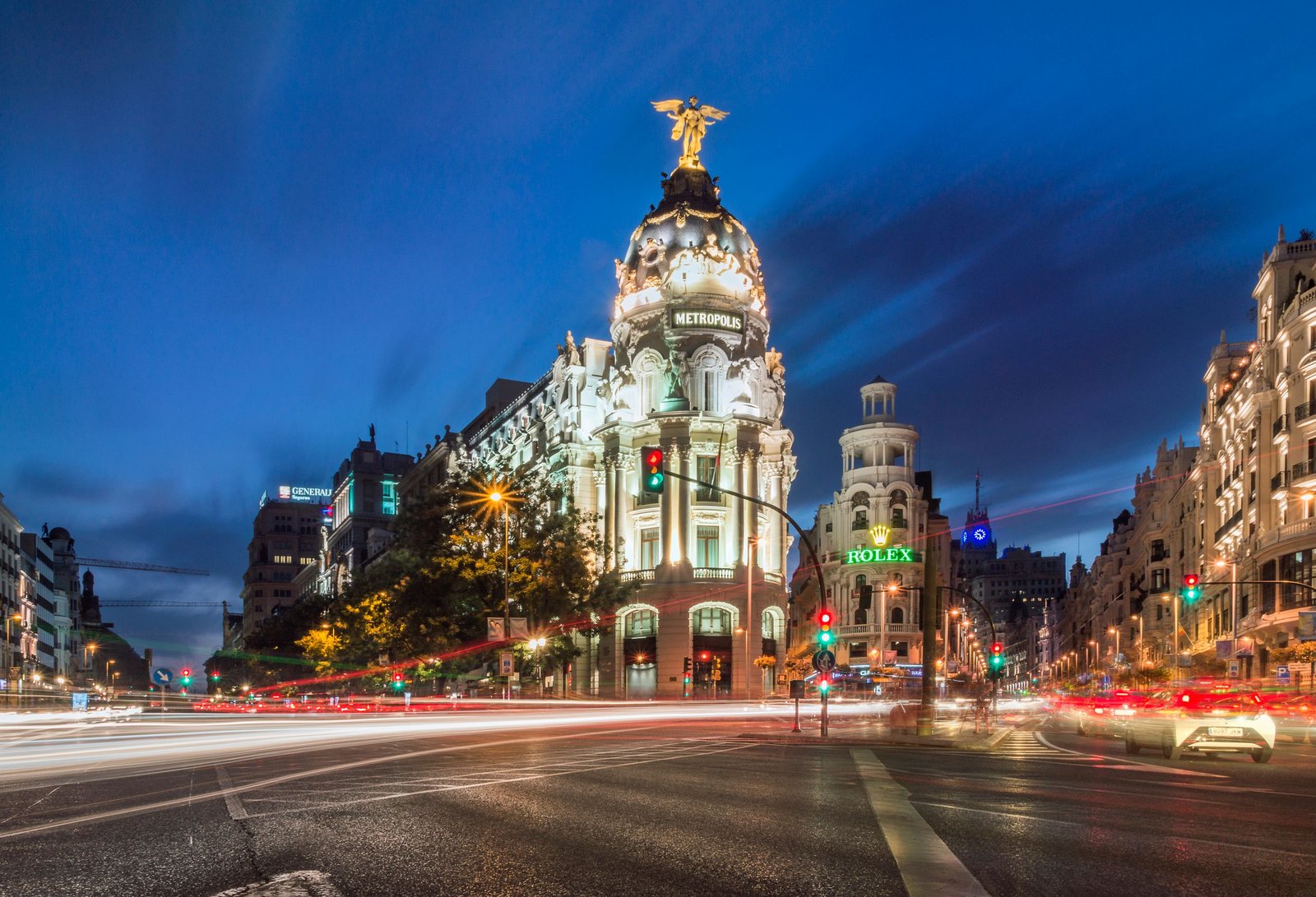
One correction to a claim that turns up in a lot of Madrid guides: Goya is not buried in a city cemetery. His tomb is set under the frescoed dome he painted himself, inside the small Ermita de San Antonio de la Florida by the Manzanares river, northwest of the centre. Entry is free, the ceiling is often called Goya’s Sistine Chapel, and it is a 15-minute detour by Metro to Principe Pio. Finish the day on Gran Via for the early-1900s architecture and the theatres, or back at the Templo de Debod if you missed the sunset on Day 1.
A day trip worth taking: Toledo
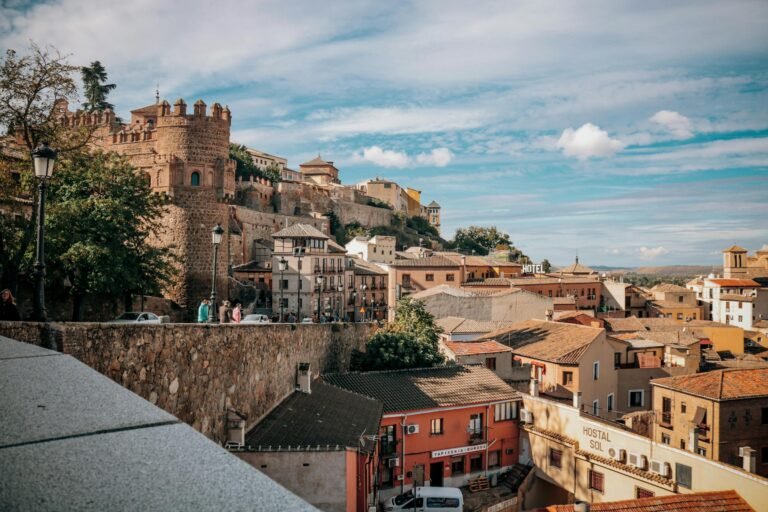
Toledo is 33 minutes from Madrid’s Atocha station on the Avant high-speed train, and it is the day trip I would choose first. The entire walled old town is a national monument: the cathedral, the Alcazar, El Greco paintings hanging where they were painted to hang, and lanes that open without warning onto views over the River Tagus. I spent a day there walking the old town, taking some quiet time along the river below the walls, and having a long lunch at a local restaurant, and it filled the day comfortably. Book the Avant a few days ahead, because the cheap seats sell out and the slower regional trains take noticeably longer.
Segovia, with its Roman aqueduct and its castle, and El Escorial, the enormous royal monastery in the hills, are the other two standard day trips, both under an hour from the city.
A seasonal note: bullfighting at Las Ventas
Bullfighting is not a year-round event in Madrid. The season at the Las Ventas ring runs from spring into October, with near-daily fights during the Feria de San Isidro from early May to mid-June, the busiest and most prestigious stretch of the calendar.
I went to a traditional corrida on one trip, and I would say it is worth attending once for the experience and for the insight it gives into a long-running Spanish tradition: the ritual, the music, the costume, and the sheer difficulty of the contest. It is not an event for animal lovers. The bull is almost always killed in the arena. On rare occasions a bull that has fought exceptionally well is pardoned and sent back to the ranch to live out its life in pasture rather than face the ring again, but that is the exception. Go in knowing what it is, or skip it.
Frequently asked questions
Is three days enough for Madrid?
Yes, for the city itself. Three days covers the three major museums, the Royal Palace, the historic centre and the Retiro at a reasonable pace, with an evening to spare. Add a fourth day if you want a day trip to Toledo or Segovia without rushing.
What is the best way to get around Madrid?
On foot in the centre, and the Metro for longer distances. The centre is small and flat. Buy a refundable Multi Card and load a 10-trip Metrobus ticket; contactless bank cards do not work on the Metro gates.
Can I see the Prado and the Reina Sofia for free?
Yes. Both open their permanent collections free in the last two hours of the day: the Prado from 6:00 pm to 8:00 pm Monday to Saturday, the Reina Sofia from 7:00 pm to 9:00 pm most evenings (closed Tuesday). Queues build well before the doors open, so arrive early.
Is Madrid too hot to visit in summer?
July and August regularly pass 35 C, and many small businesses close for part of August. Spring and autumn are far more comfortable. If you do travel in summer, keep museums for the afternoon and walk in the early morning and the evening.
Do I need to book the Royal Palace in advance?
In peak season, yes. The on-the-day queue can take an hour. A timed online ticket costs a euro or two more and skips it. Citizens of the EU and of Latin American countries can enter free in the last two hours on weekday afternoons, but those slots are crowded.
Where to go next
If you are moving on from Madrid, Getting Around Spain by Train, Bus and Taxi covers the rail and bus network that links it to the rest of the country. For a slower stop after the city, Best Spanish Coastal Towns for Summer looks at both coasts. Everything we have written on the region sits on the Europe hub.
This article is for informational and educational purposes only. Always verify current travel requirements with official government sources before making travel decisions.
Partner resource. We may earn a commissionBook tours & activities (Viator) →