
Note: This site participates in the Amazon Affiliates and other affiliate partner programs at no cost to you. Visiting an affiliate partner site may result in this site receiving a commission. For more information visit our Affiliate Disclosure page.
The Camino Portugués, the Portuguese Way, runs from Lisbon to Santiago de Compostela, about 620 km. But most people do not start in Lisbon. They start in Porto, roughly halfway, and walk the last 12 to 14 days. Here is how the route breaks down, and how to choose your starting point and your path.
The short answer
From Lisbon it is about 620 km and four to five weeks. From Porto it is about 260 km on the Central route or 280 km on the Coastal route, 12 to 14 days, and comfortably more than the 100 km needed for a Compostela. If you have two weeks, start in Porto. If you have a month and want the quiet, less-walked southern half, start in Lisbon.
Albergues and hotels along the Portuguese Way fill up fast in spring and autumn. Here’s a live look at places to stay for your dates. Booking.com
Starting in Lisbon
The Lisbon to Porto section is about 390 km and 16 to 20 days, and it is the least-walked stretch of any major Camino: long spans of road and farmland, patchy waymarking in places, far fewer pilgrims, and fewer albergues. It is hot in summer. Its rewards are the towns, Santarém, Tomar, Coimbra, and near-solitude. Choose it if you want time and quiet more than scenery or company. We will cover the Lisbon to Porto stages in detail separately.
Starting in Porto
From Porto the route splits, and the infrastructure is dense: albergues, pilgrim menus, clear waymarking, and other walkers to fall in with. Two or three days in Porto first is worth it. This is the section to walk if it is your first Camino or you are short on time.
Coastal or Central from Porto
Central route (~260 km). Inland through Barcelos, Ponte de Lima and Rubiães, then across the border at Tui. Rolling farmland, vineyards, medieval towns, and the more traditional “Camino” feel, with more fellow pilgrims. There are some real climbs, notably the Labruja ascent before Rubiães.
Coastal route (~280 km). North along the Atlantic through Vila do Conde, Esposende, Viana do Castelo and Caminha, then across the Minho river into Spain and on through Vigo. Flatter, with ocean views, beaches and fishing towns, and sea wind. The Senda Litoral variant runs on boardwalks right at the water’s edge.
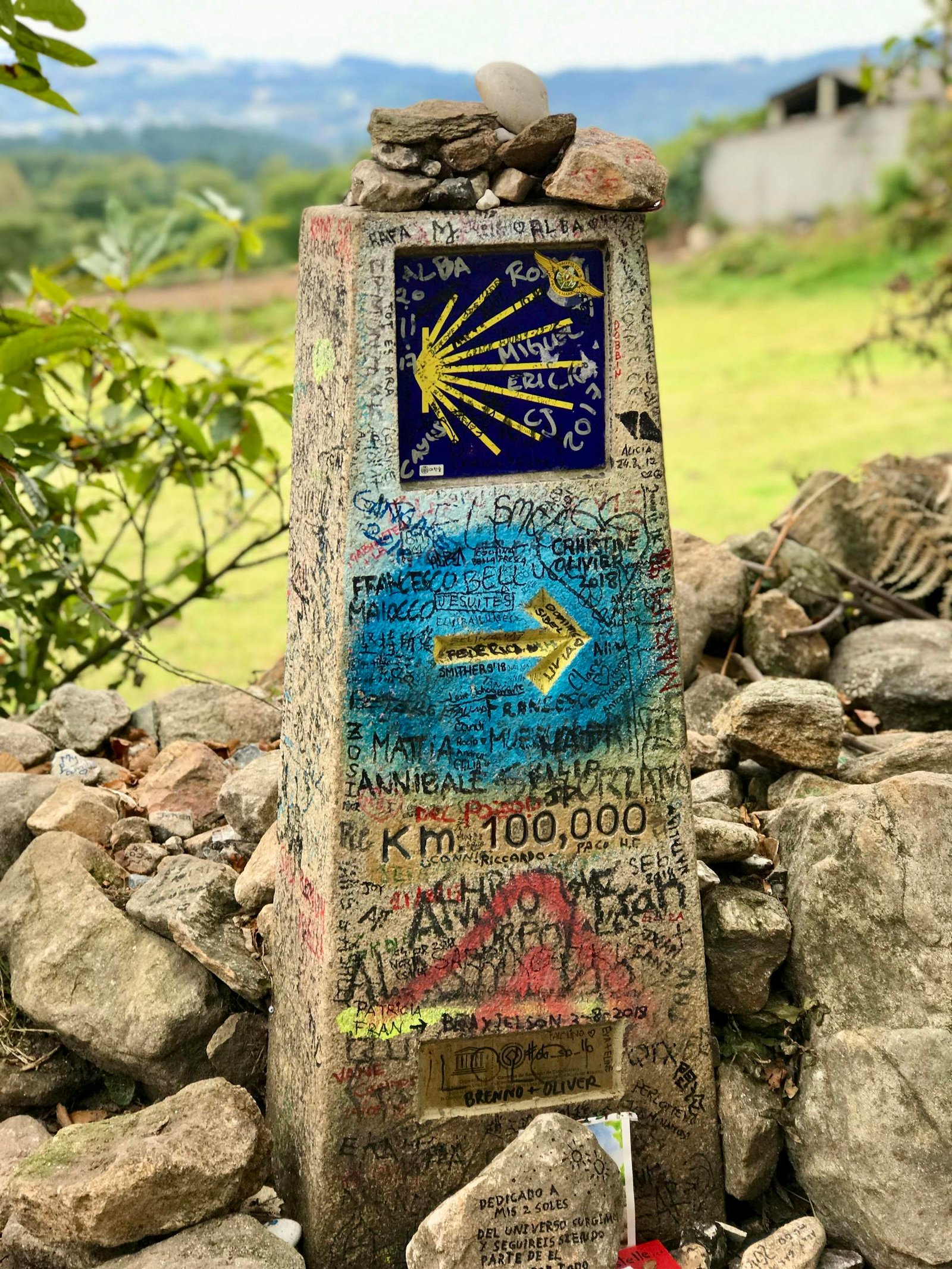
The two routes rejoin at Redondela, north of Vigo, and share the final 100 km or so to Santiago. A third option, the Spiritual Variant, branches off near Pontevedra and includes a short boat trip up the Ría de Arousa.
Wondering what to pack for the walk? Camino de Santiago Packing List →
What the Coastal route is like
I have walked the Coastal route twice. The first time, from Porto with a companion, was 21 days and about 280 km, flat, breezy, a lot of beach and boardwalk, easy underfoot. The second time I went solo and started at Viana do Castelo, taking days off the trail to see Valença’s walled town and to spend time in Vigo, including the ferry out to the Cíes Islands. Both times I used the daily luggage transfer and walked with a light daypack. The Coastal route is the easier walk; the Central route is the more traditional one. Neither is wrong.
Distances and days
| Section | Distance | Walking days |
|---|---|---|
| Lisbon → Santiago (full) | ~620 km | 30-35 |
| Lisbon → Porto | ~390 km | 16-20 |
| Porto → Santiago (Central) | ~260 km | 12-14 |
| Porto → Santiago (Coastal) | ~280 km | 13-15 |
| Tui / Valença → Santiago (minimum for the Compostela) | ~115 km | 5-6 |
The credential and the Compostela
Carry a pilgrim credential (credencial) and get it stamped along the way, twice a day over the final 100 km, which on this route means from Tui or Valença. Hand it in at the Pilgrim’s Office in Santiago to receive your Compostela. The full eligibility rules are in our Compostela guide, and how the stamps work is covered in Camino stamp culture.
Where to stay and when to go
Accommodation runs from municipal and parish albergues (cheapest, dorm beds, pilgrims only) through private hostels to pensions and hotels. Book ahead in spring and autumn, and always if you are using a luggage-transfer service. The best months are April to June and September to October. July and August are hot and busy; winter is quiet but wet, and many albergues close.
Frequently asked questions
How long does the Portuguese Camino take?
From Porto, 12 to 14 days. From Lisbon, four to five weeks. The last 100 km from Tui takes five to six days.
Should I start in Lisbon or Porto?
Porto for a first Camino or a two-week trip. Lisbon if you have a month and want the quiet, less-walked southern half.
Coastal or Central route from Porto?
Coastal for flatter walking and ocean views; Central for the traditional inland Camino feel and more pilgrims. They rejoin at Redondela.
Is the Portuguese Camino hard?
It is one of the easier major Caminos, especially the Coastal route, mostly flat, well served, with good weather in the shoulder seasons.
Do I get a Compostela on the Portuguese Camino?
Yes, if you walk at least the last 100 km, from Tui or Valença, with your credential stamped twice a day.
Where to go next
For who qualifies for the certificate, read the Compostela requirements. If you are also considering the Kumano Kodo in Japan, see becoming a Dual Pilgrim. Everything we have written on the route sits on the Camino de Santiago hub.
This article is for informational and educational purposes only. Always verify current travel requirements with official government sources before making travel decisions.
Partner resource. We may earn a commissionCompare albergues & hotels on the Camino (Booking.com) →